Cluster 01 · Home Service Operations Ecosystem
The ResearchUnderstanding the Problem

How do I know
what is the right problem to solve?
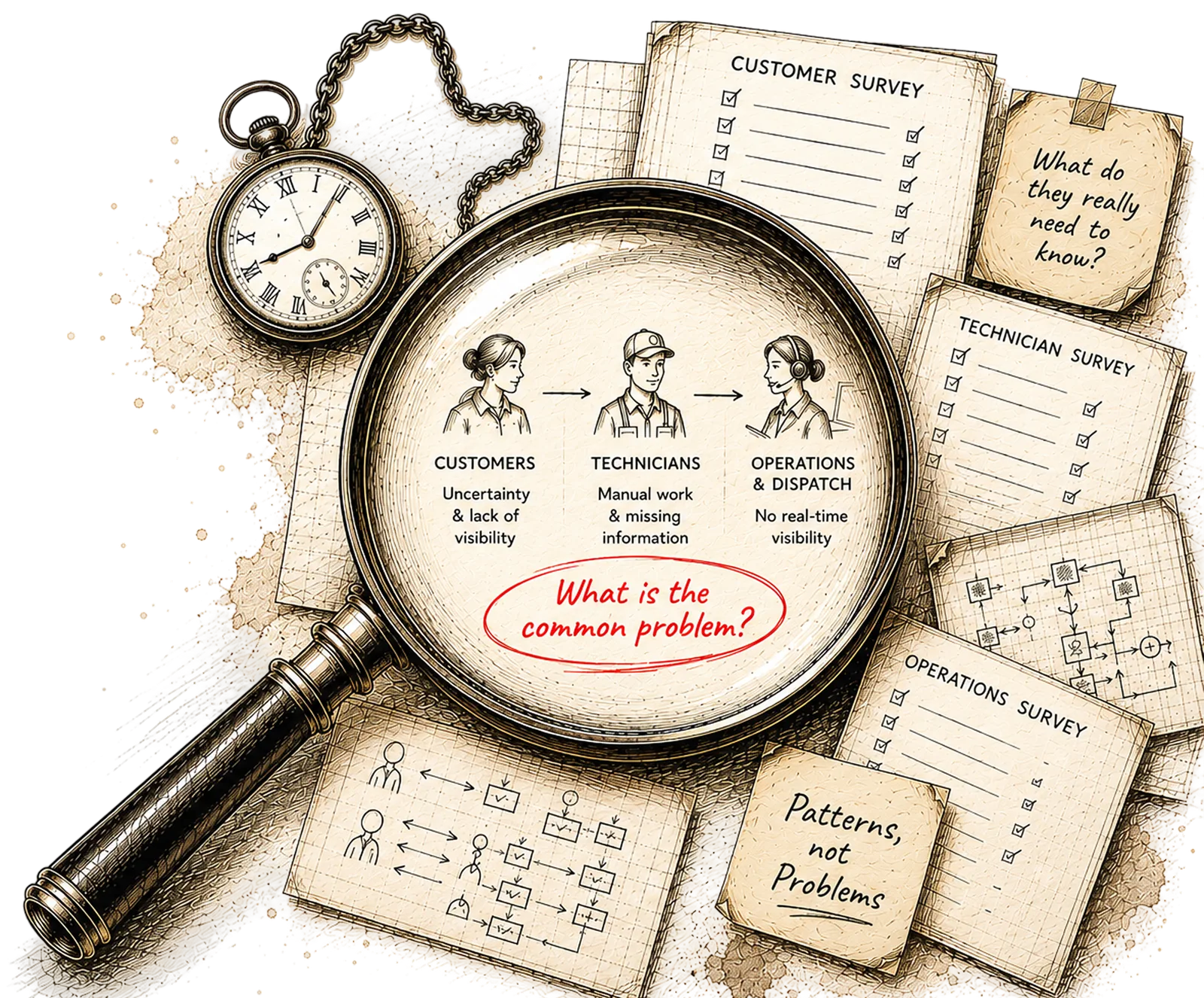
To answer that question, I gathered perspectives from everyone involved in the service. I collected insights from 65 people across three stakeholder groups. Although each described different frustrations, a common pattern began to emerge.
Five artifacts, in the order they were made.
Scroll to explore
01
Surveys
Gathering the evidence
The surveys gave each group a voice in the same system. What looked like three different sets of frustrations began pointing toward the same underlying problem.

Different roles. Different frustrations.
The same need: One Shared View.
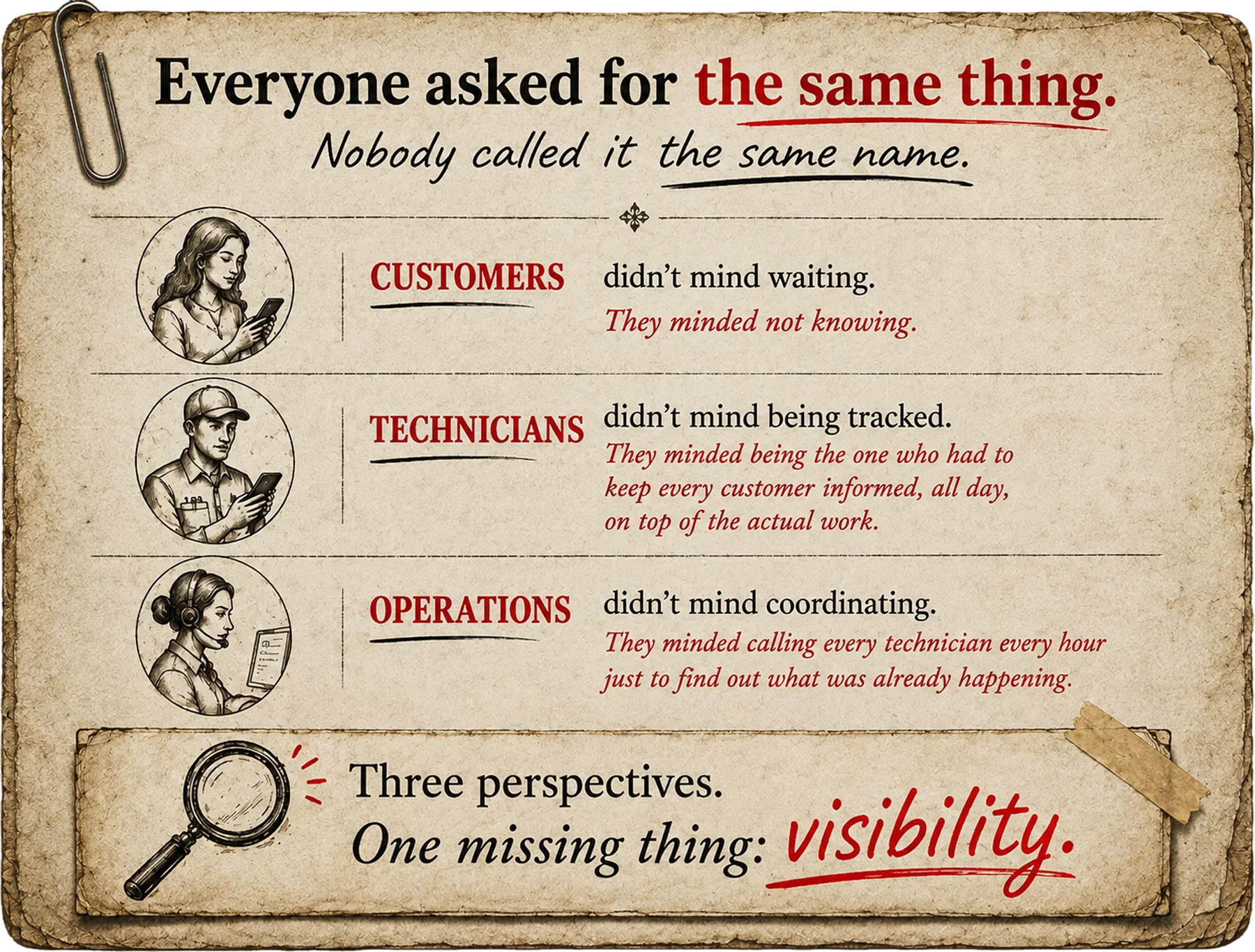
Every persona attribute came from a survey response, not an assumption.
- Customer Survey Report52 responses
- Technician Survey Report8 responses
- Operations Survey Report5 responses
Online surveys, interviews and text outreach, professional and personal networks, industry and online communities.
02
Affinity Mapping
Organizing the evidence
Grouped the research observations into meaningful themes, revealing patterns that individual responses alone couldn't expose.
Fragmented Information connected every pain point.
03
Service Blueprint
Showing what's hidden
Connected customer actions with frontstage and backstage processes to reveal operational dependencies, communication breakdowns, and hidden inefficiencies.
Hidden Operational Processes shaped the customer experience.
04
Journey Maps
Tracing the experience
Mapped each stakeholder's experience across the appointment lifecycle to uncover emotional highs, frustrations, communication gaps, and opportunities for improvement.
Communication Gaps appeared throughout the entire appointment lifecycle.
05
Personas
Giving it a face
Translated research findings into representative stakeholder profiles that captured each group's goals, pain points, behaviors, and needs.
Each role required Different Answers to make decisions.