From one simple question to a service solution

Why do I have to wait
all day for the cable guy?

The question that started it all

This project follows the journey from an everyday service frustration to the design of a connected solution.

Through research, service design, and systems thinking, that single question led to a deeper understanding of how information influences every interaction and decision throughout the entire service.

The answer was bigger
than I expected
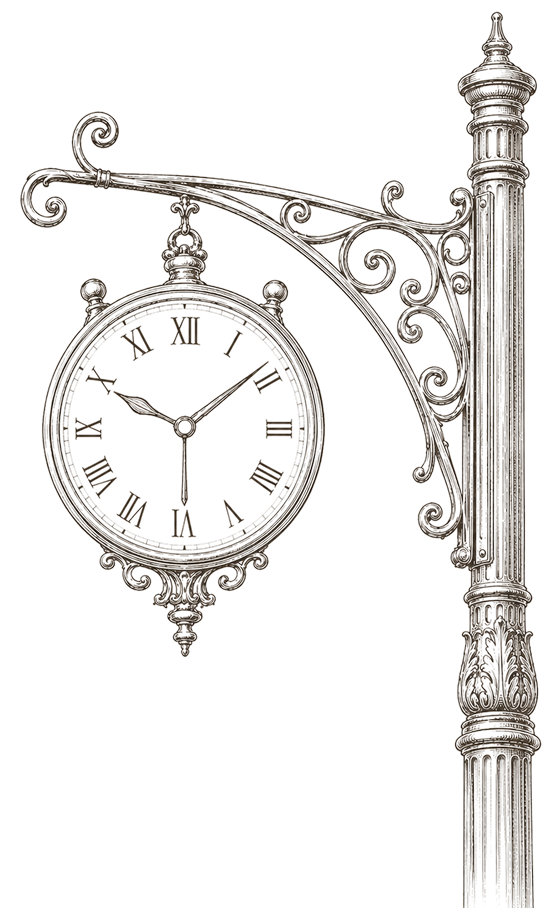
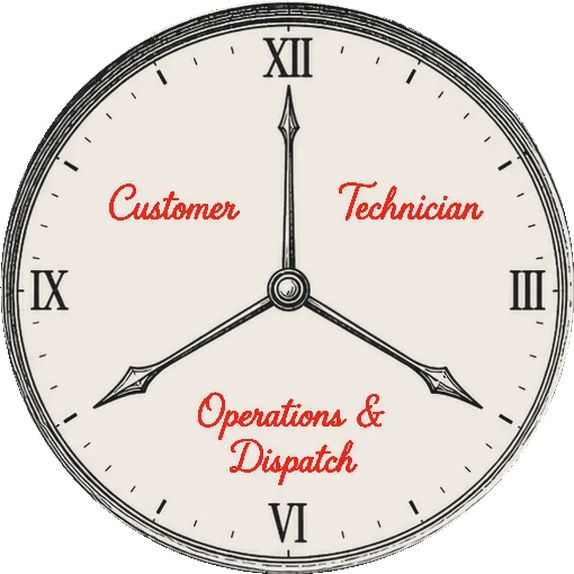
An ornate street clock hanging from a fluted lamp post

01. the problem

An aged, taped paper note that reads: Every answer, led to another question.

With all the technology available today,
Why are customers still expected to wait all day for a service appointment?

Looking Beyond
the Wait

At first, the challenge seemed simple: customers were waiting too long for service appointments. But the more I investigated, the more I realized the waiting wasn't the real issue, it was only the visible symptom of something much larger.

To understand what was really happening, I had to look beyond the customer's experience and examine the entire service ecosystem.
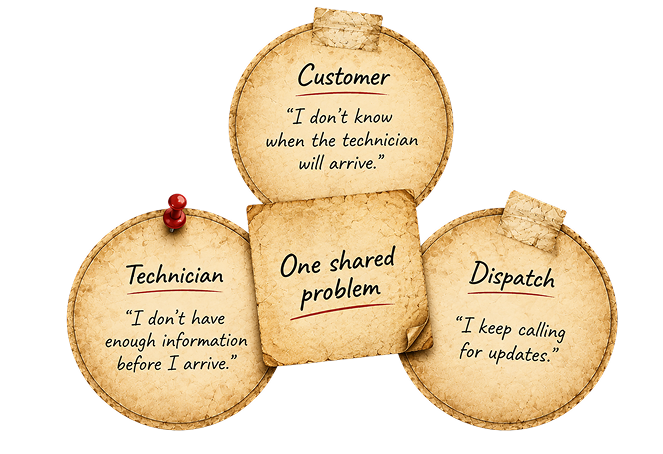
Three taped paper notes around a central note reading 'One shared problem', Customer: I don't know when the technician will arrive; Technician: I don't have enough information before I arrive; Dispatch: I keep calling for updates.
Thoughts gathered from surveys.

02. The Research

What did I Discover?

From understanding the real problem to designing a connected ecosystem, this is how the pieces came together.

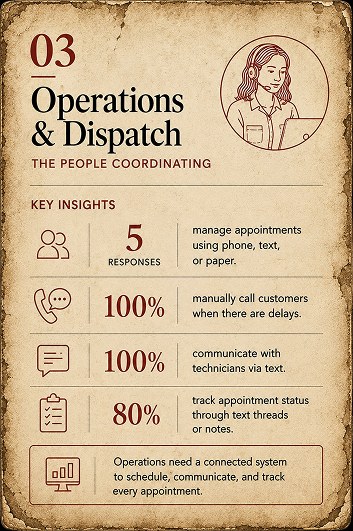
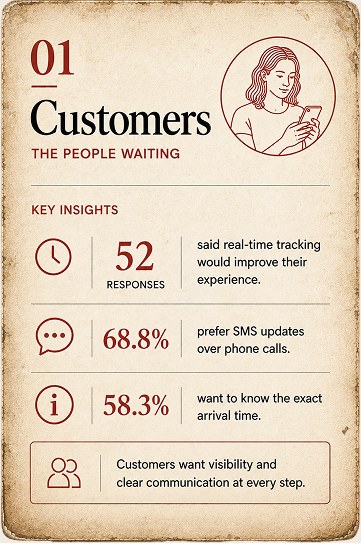
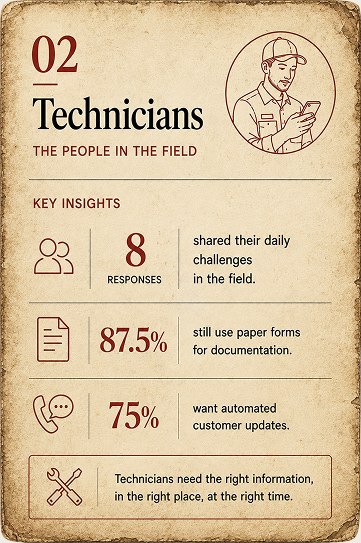
Customers, the people waiting. 52 responses said real-time tracking would improve their experience; 68.8% prefer SMS updates over phone calls; 58.3% want to know the exact arrival time. Customers want visibility and clear communication at every step. Technicians, the people in the field. 8 responses shared their daily challenges in the field; 87.5% still use paper forms for documentation; 75% want automated customer updates. Technicians need the right information, in the right place, at the right time. Operations & Dispatch, the people coordinating. 5 responses manage appointments using phone, text, or paper; 100% manually call customers when there are delays; 100% communicate with technicians via text; 80% track appointment status through text threads or notes. Operations need a connected system to schedule, communicate, and track every appointment.

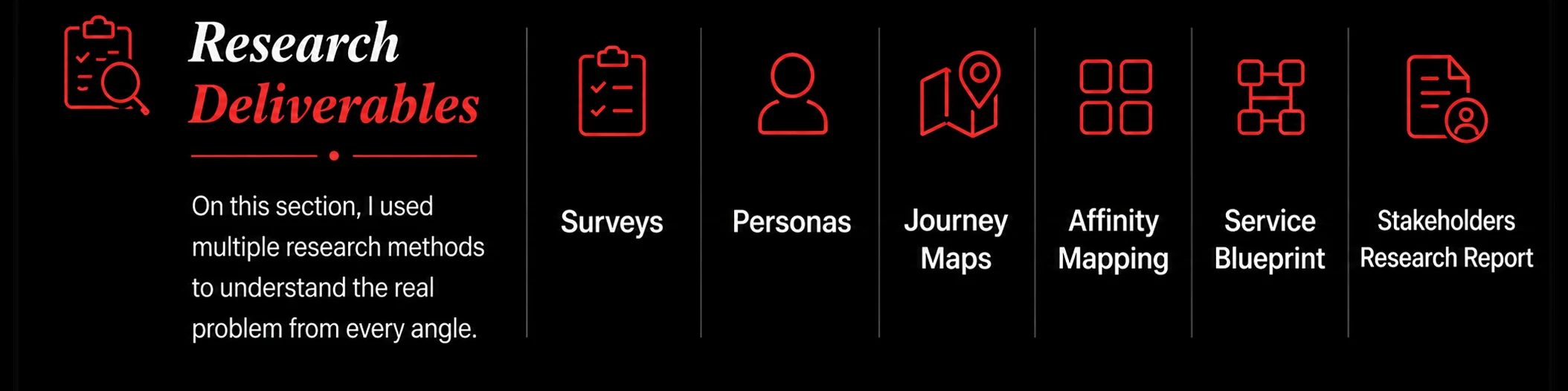
To answer that question, first I gathered perspectives from everyone involved in the service. I collected insights from 65 people across three stakeholder groups. Although each described different frustrations, a common pattern began to emerge.
03. From Research to System Design System Design & Architecture

How did I Design the System?

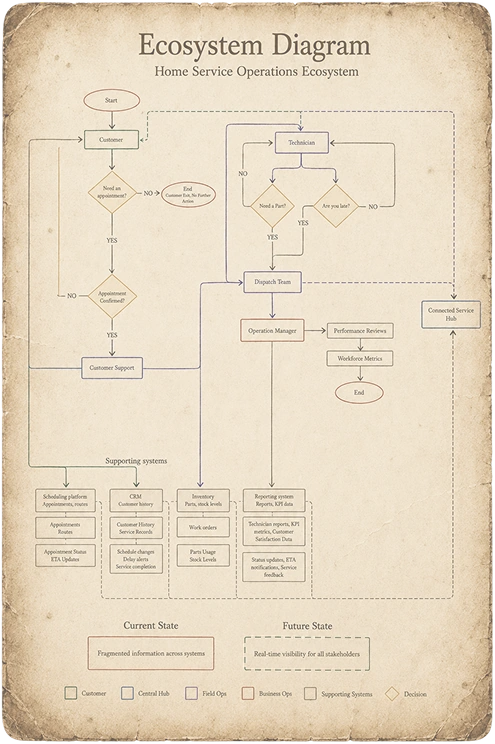
Ecosystem Diagram, the full Home Service Operations Ecosystem flowchart.

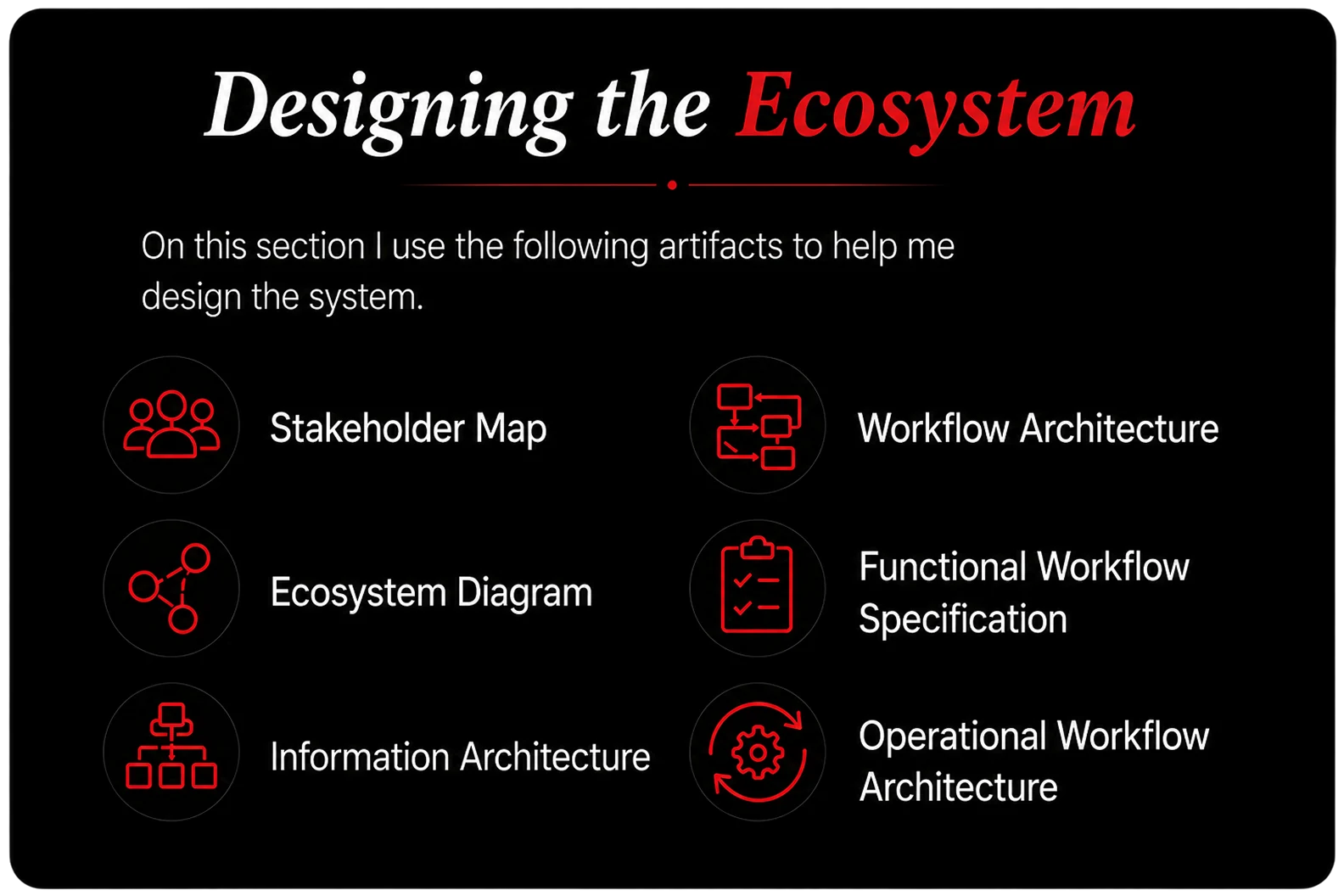
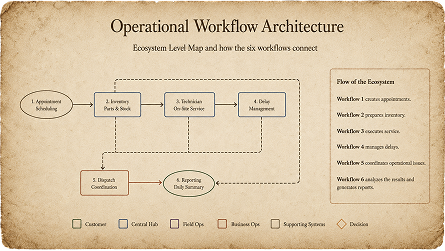
Once the service was understood, the next step was designing how it should operate. The artifacts below transformed research insights into workflows, business logic, information architecture, and system interactions before a single interface was created.
04. From Opportunity to Strategy Product Strategy

How did I decide what to build?

Research findings, combined with competitive analysis, revealed design opportunities that existing solutions weren't fully addressing. These insights guided the proposed solution.
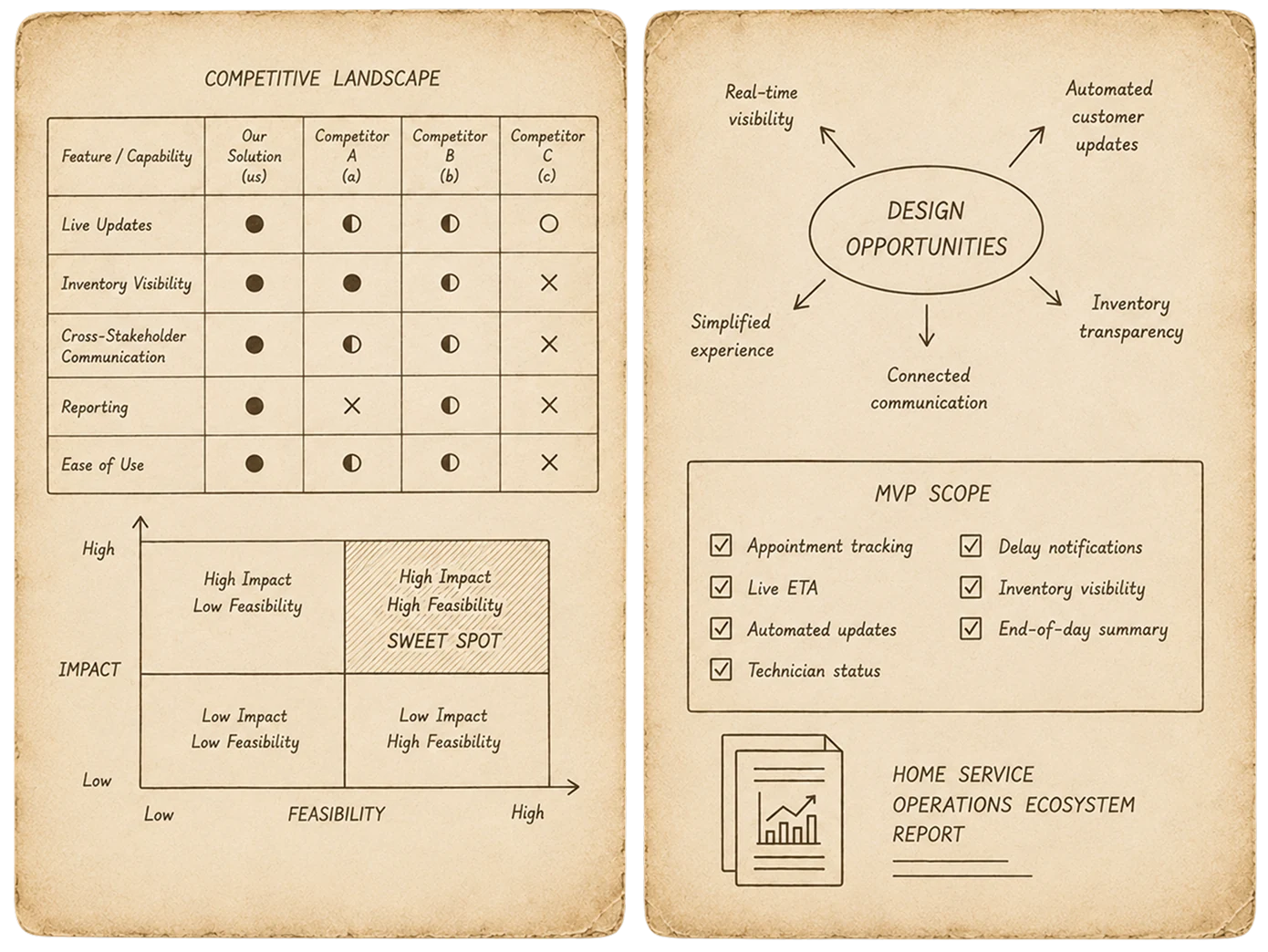
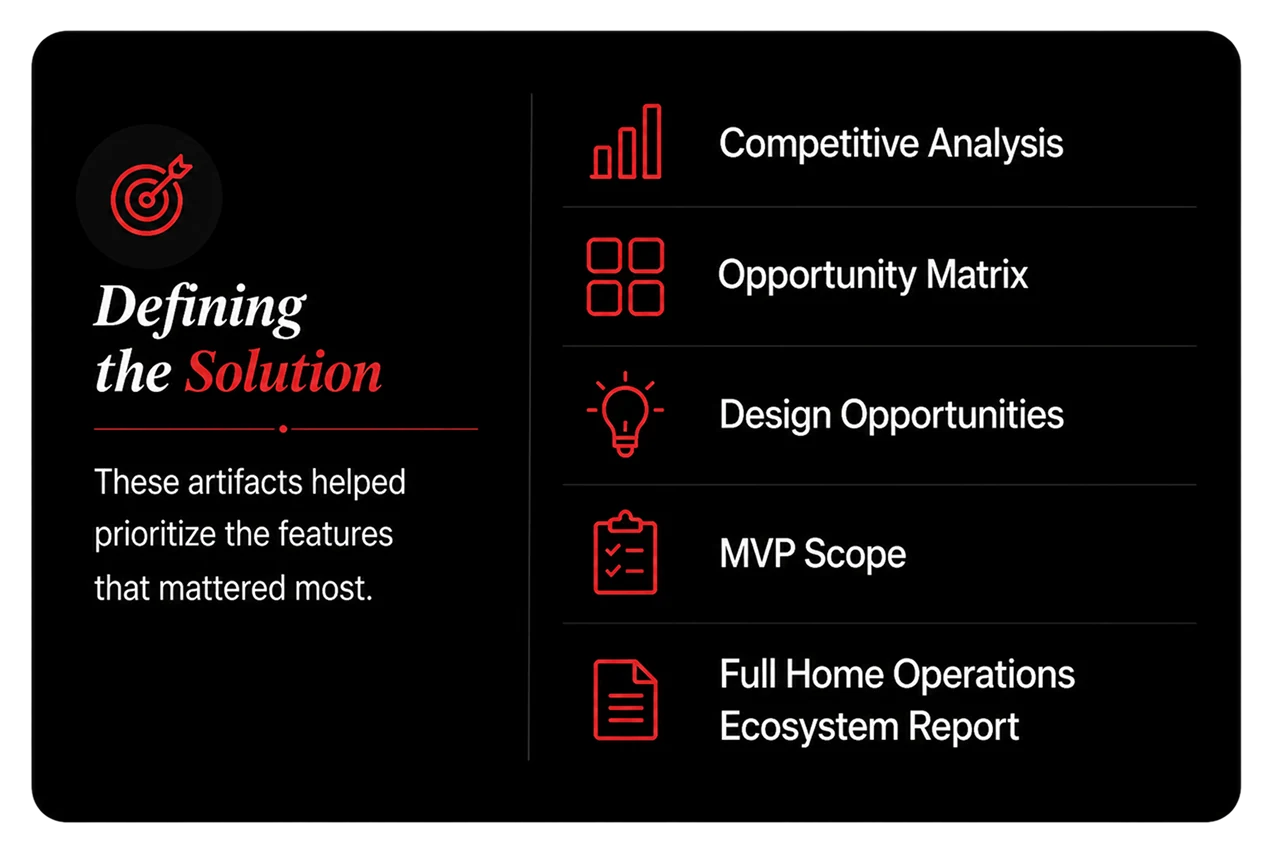
Validating the Solution: Competitive Analysis, Opportunity Matrix, Design Opportunities, MVP Scope, and Full Home Operations Ecosystem Report.
Design Opportunities radial map and MVP Scope checklist.

05. The Reveal Designing the Experience

The research revealed that
waiting wasn't the problem.
Fragmented Information was.

A taped aged note reading: The Big Surprise... A Market Gap.
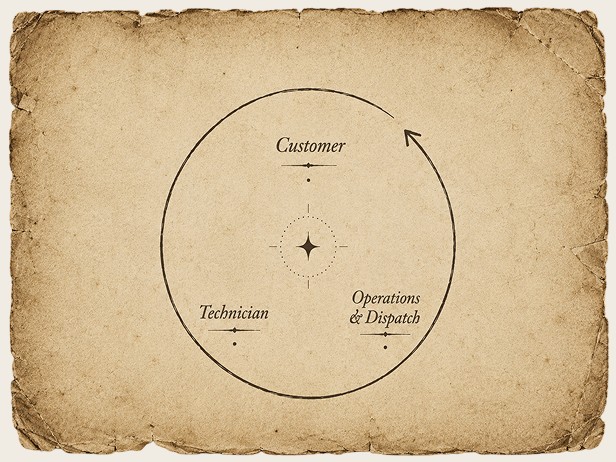
A connected loop diagram linking Customer, Technician, and Operations & Dispatch around one central point.

The solution wasn't another app or more features. It was about redesigning how information flowed between customers, technicians, and operations through one connected system.

Research uncovered another opportunity: an underserved market for small and medium home-service businesses. Existing solutions were built for enterprise budgets, leaving smaller teams to rely on disconnected tools and manual processes.
06. Bringing the Solution to Life

Designing the Experience

One Ecosystem.
Three Experiences

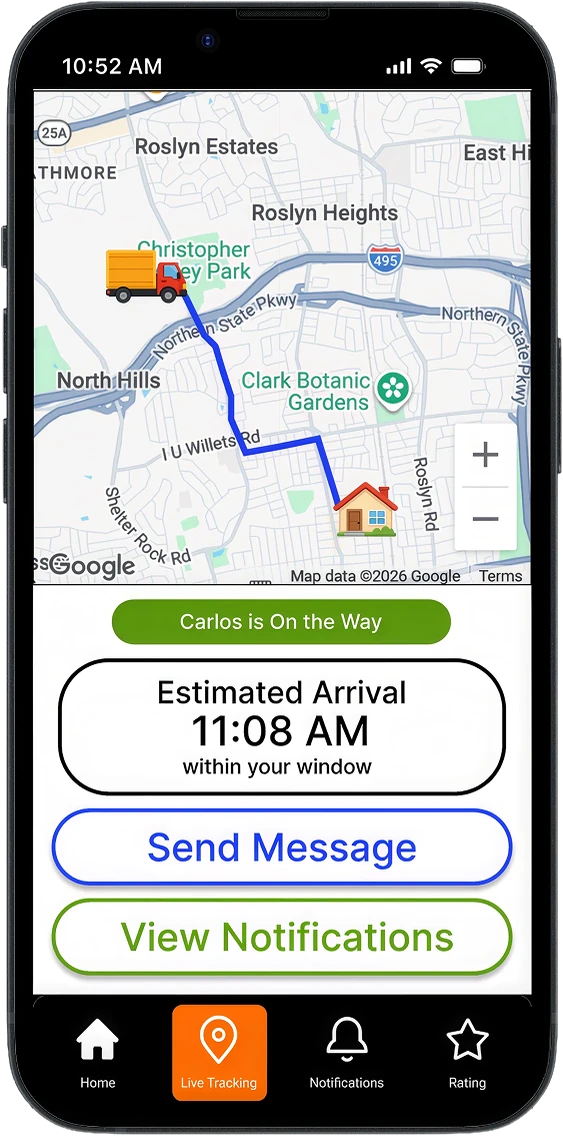
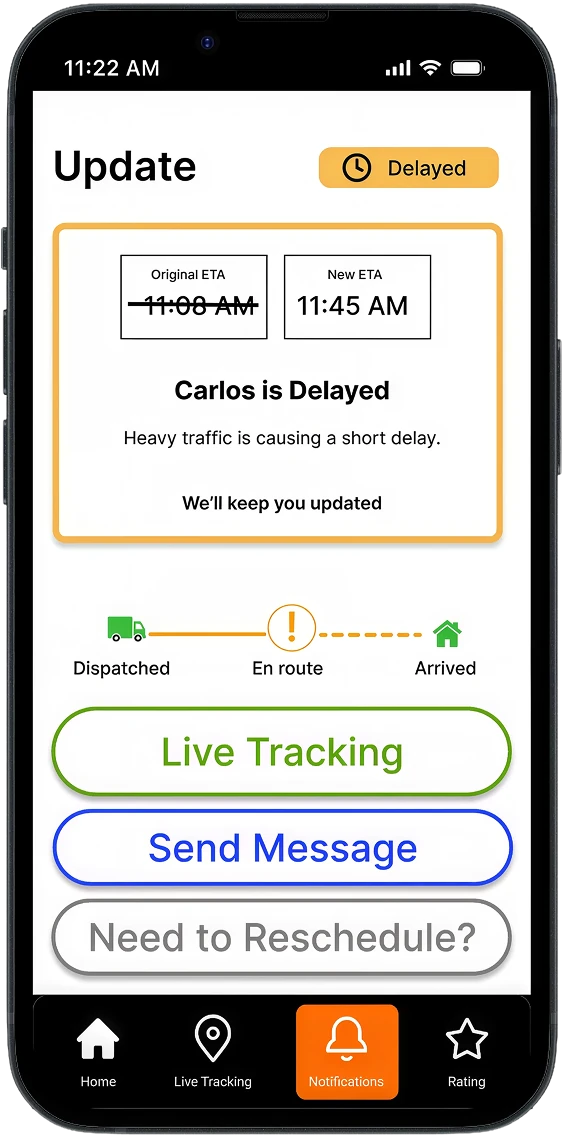
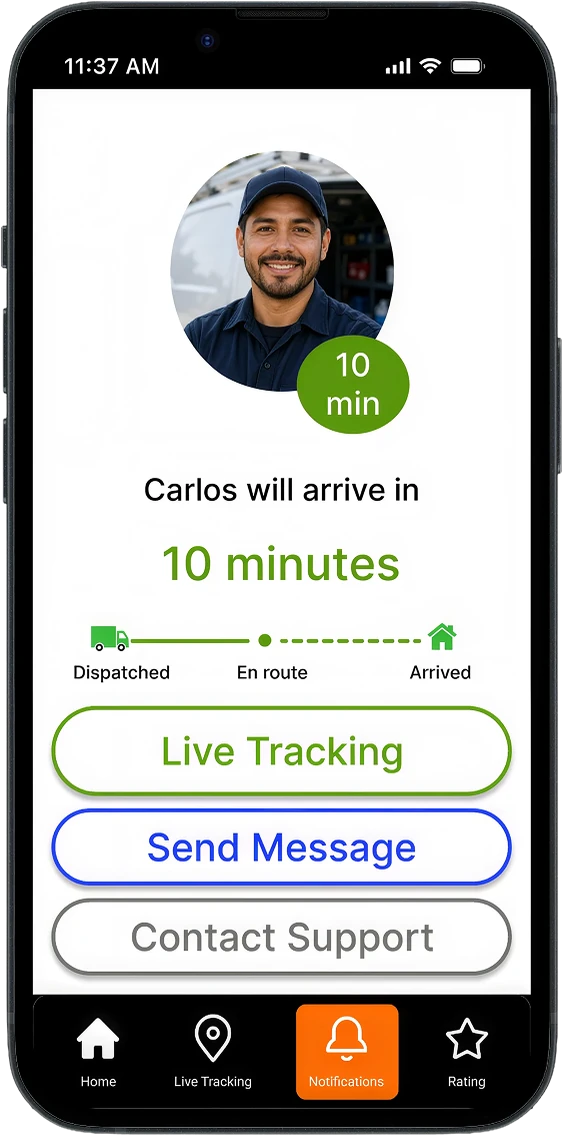
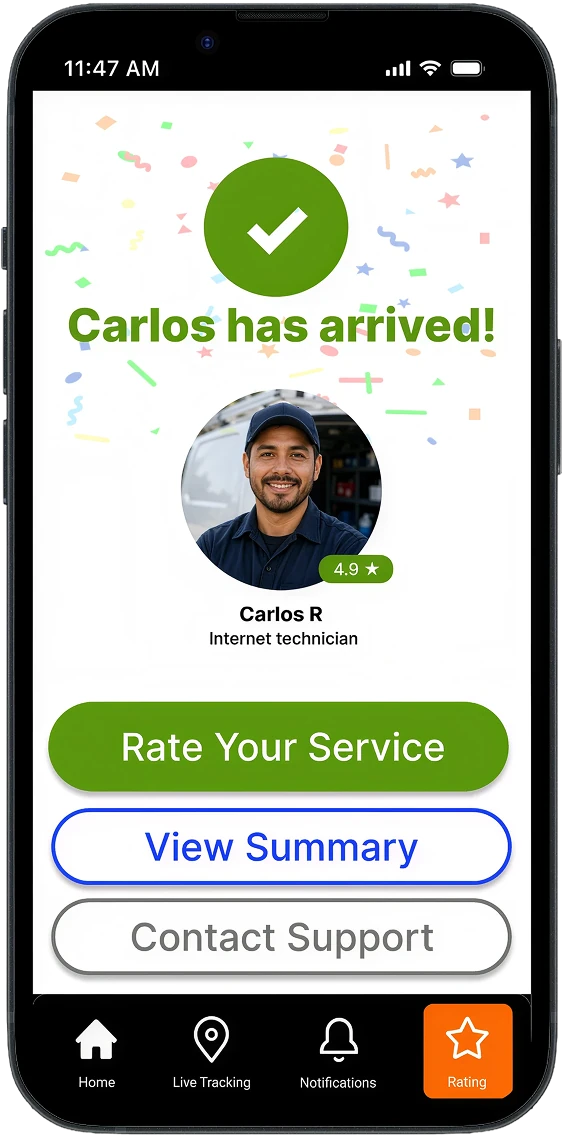
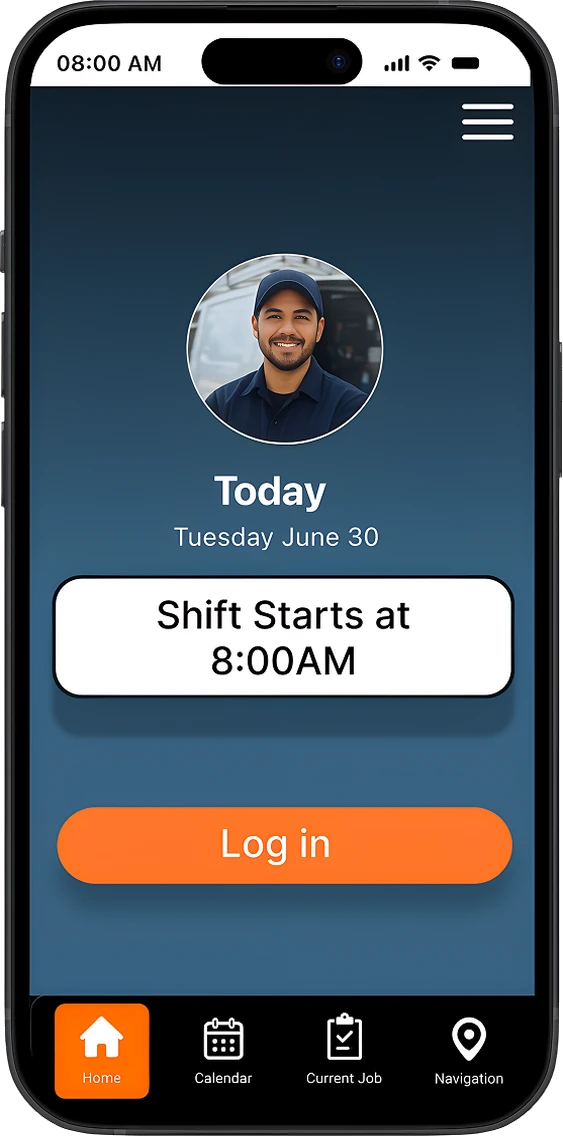
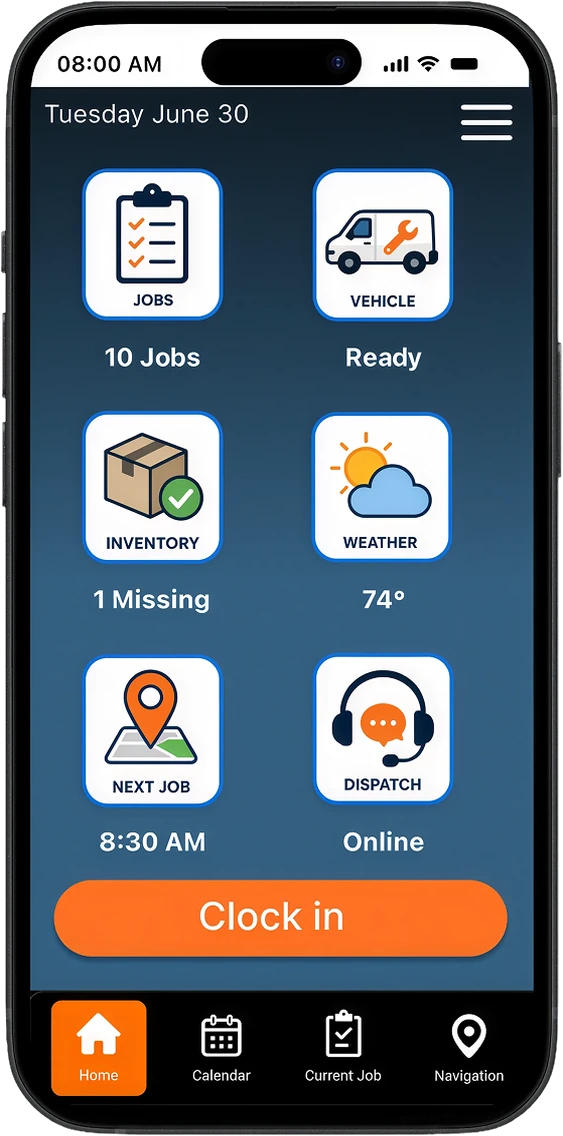
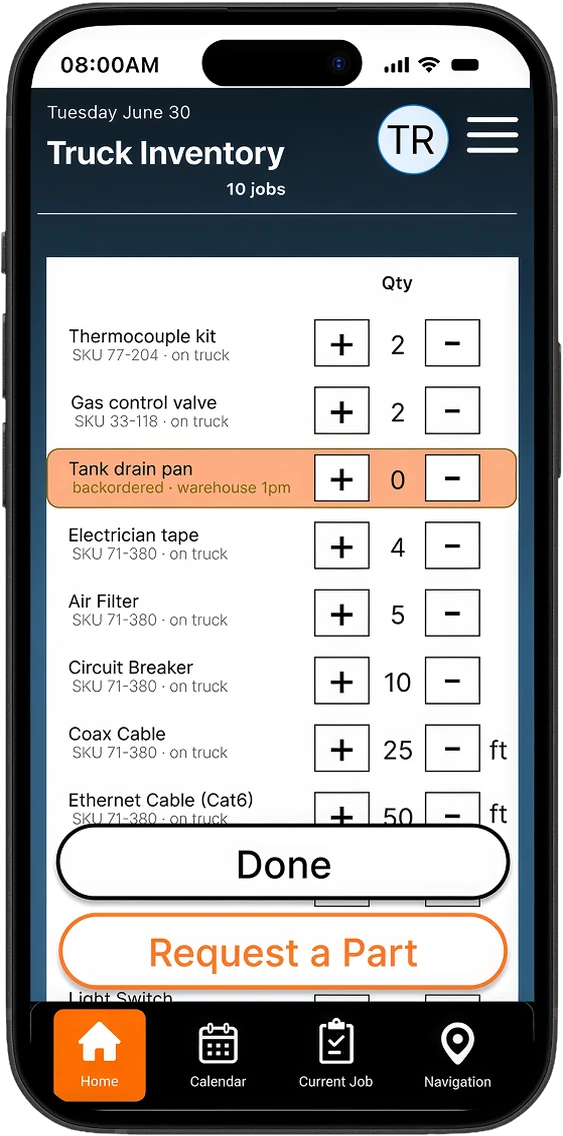
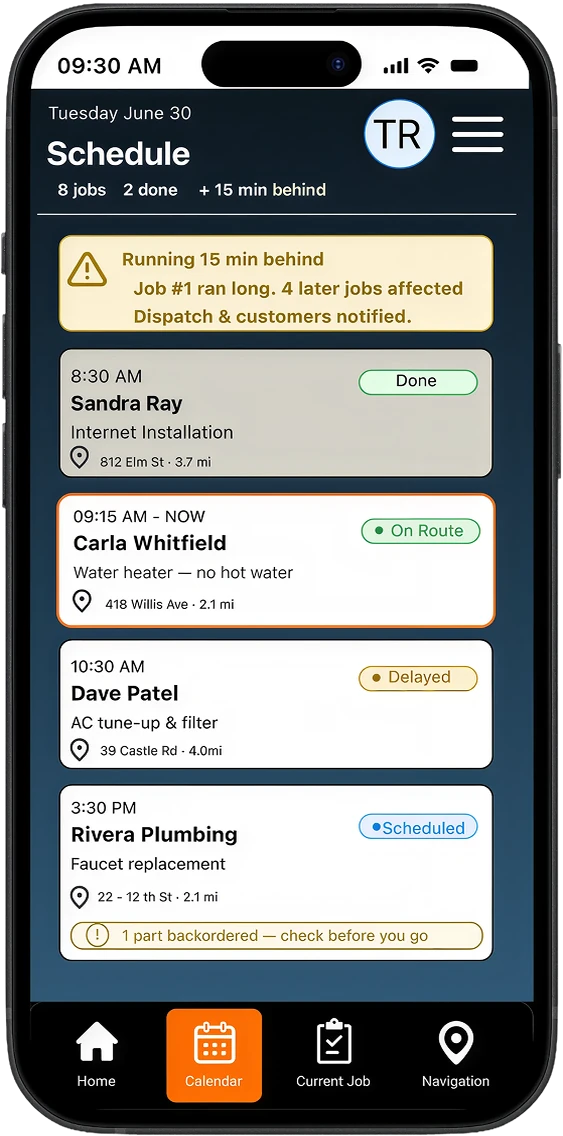
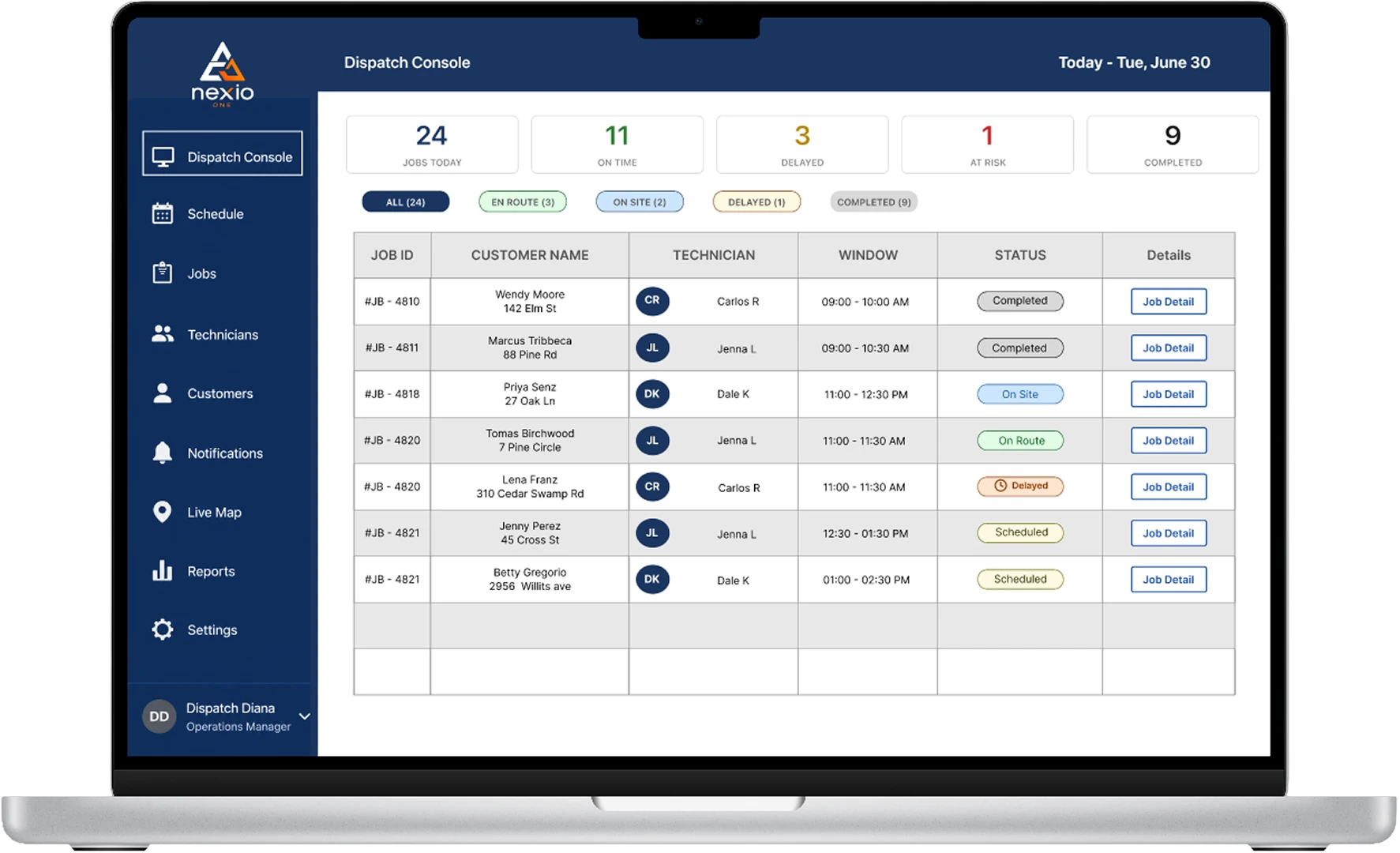
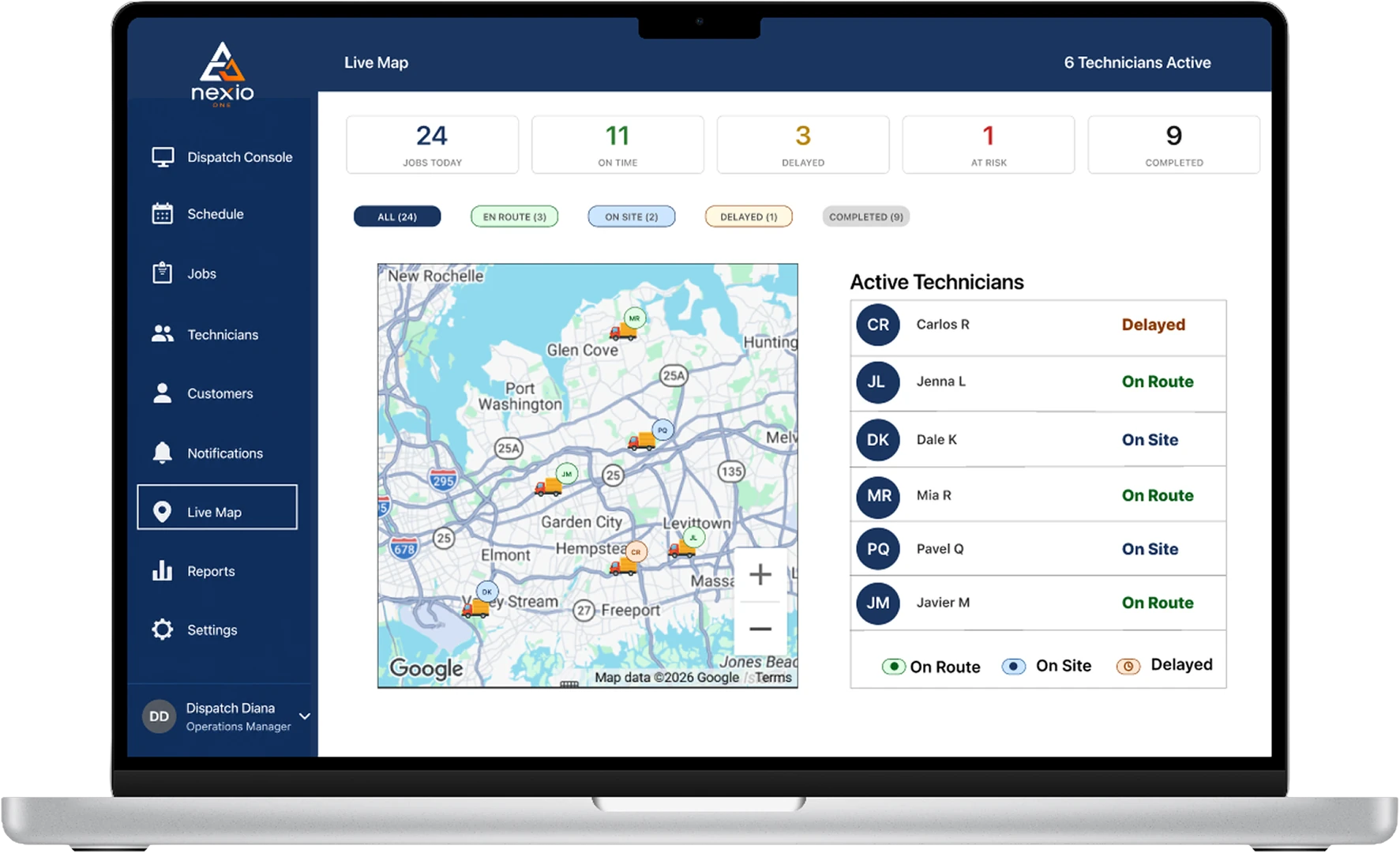
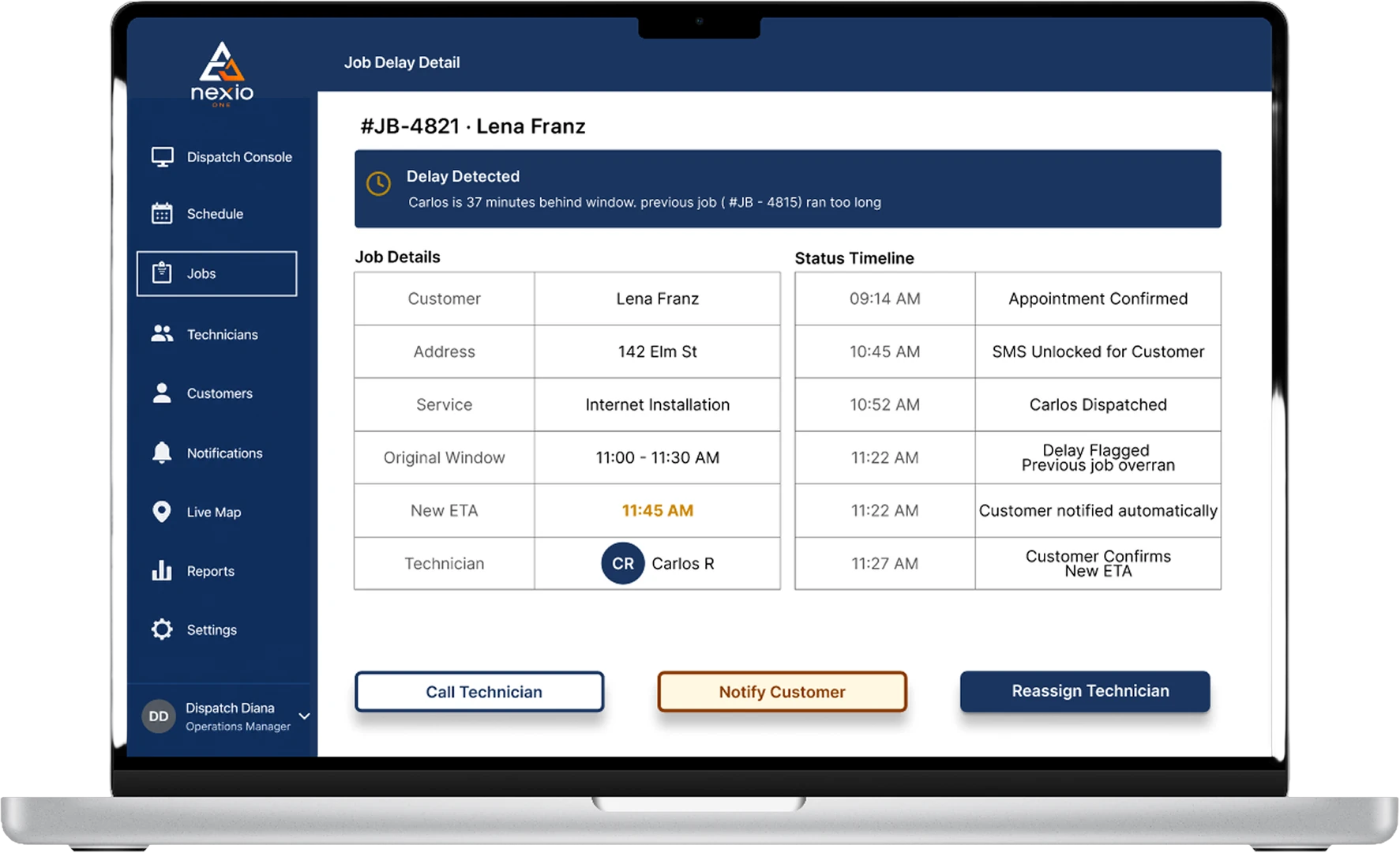
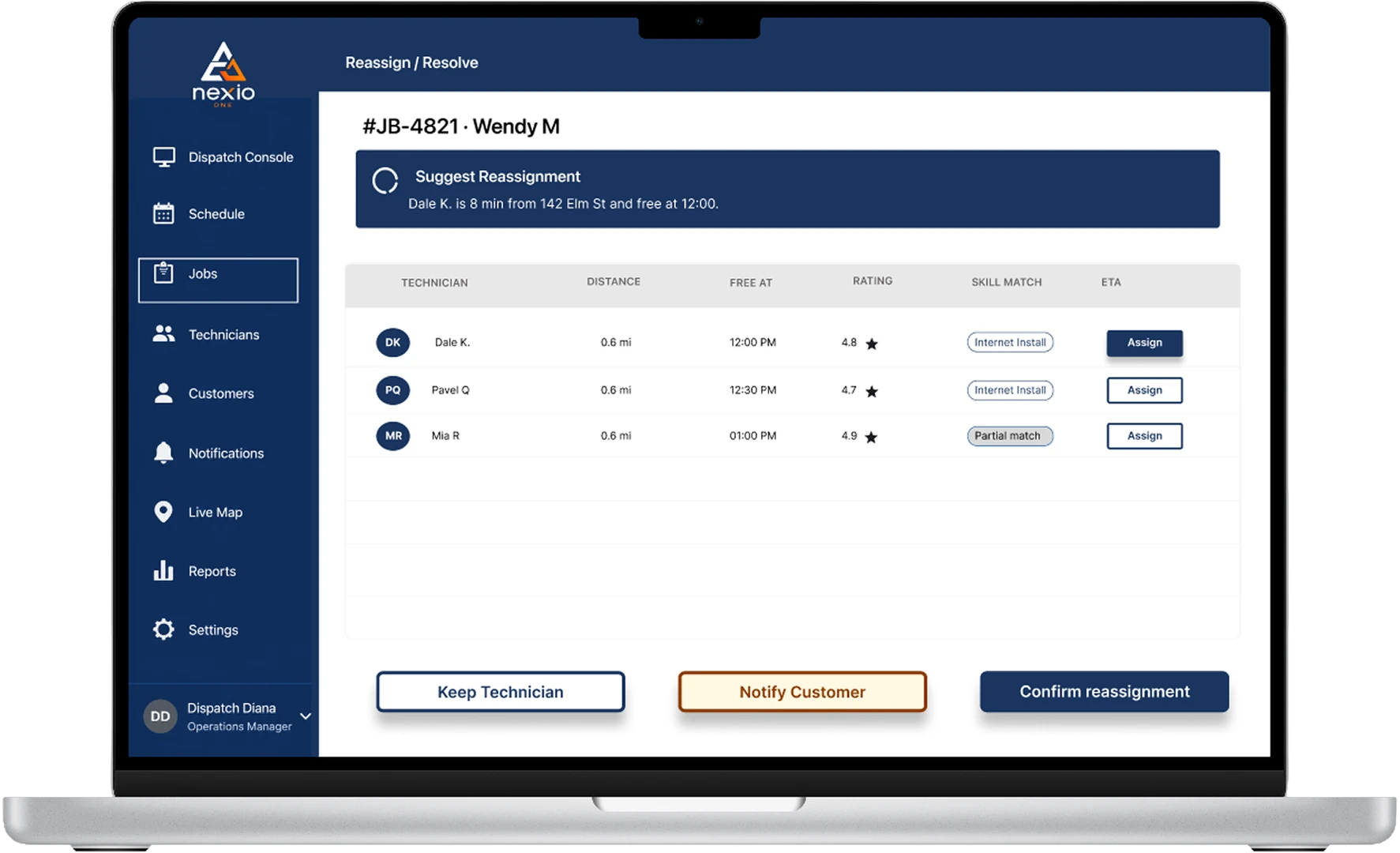
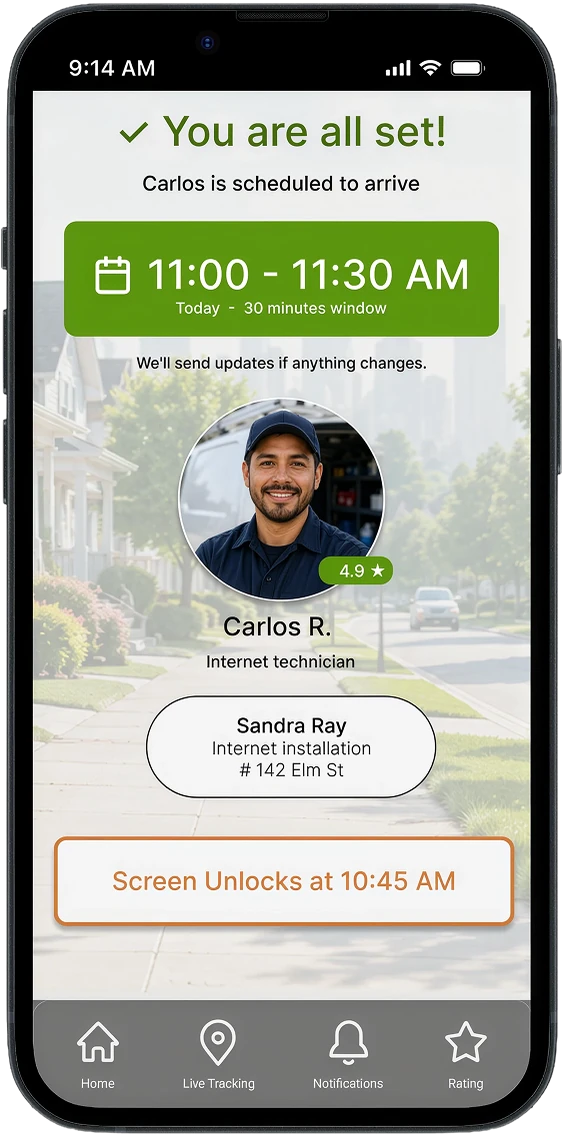
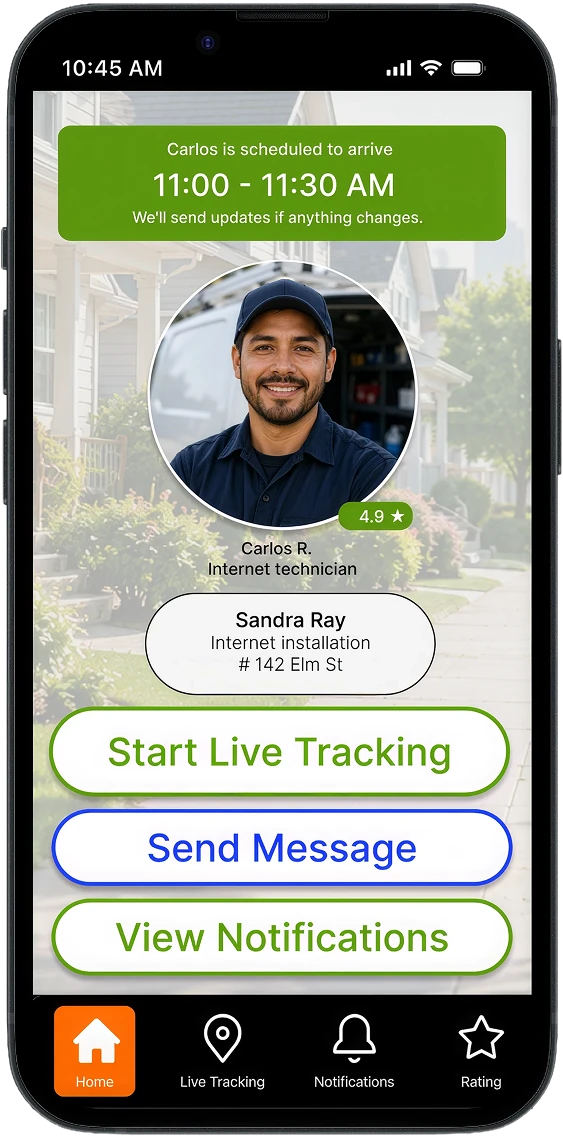
The prototypes translated that solution into connected experiences, demonstrating how shared information improved the experience for each stakeholder.

The Customer

Live tracking, dynamic ETAs, and proactive updates reduced uncertainty throughout the appointment.

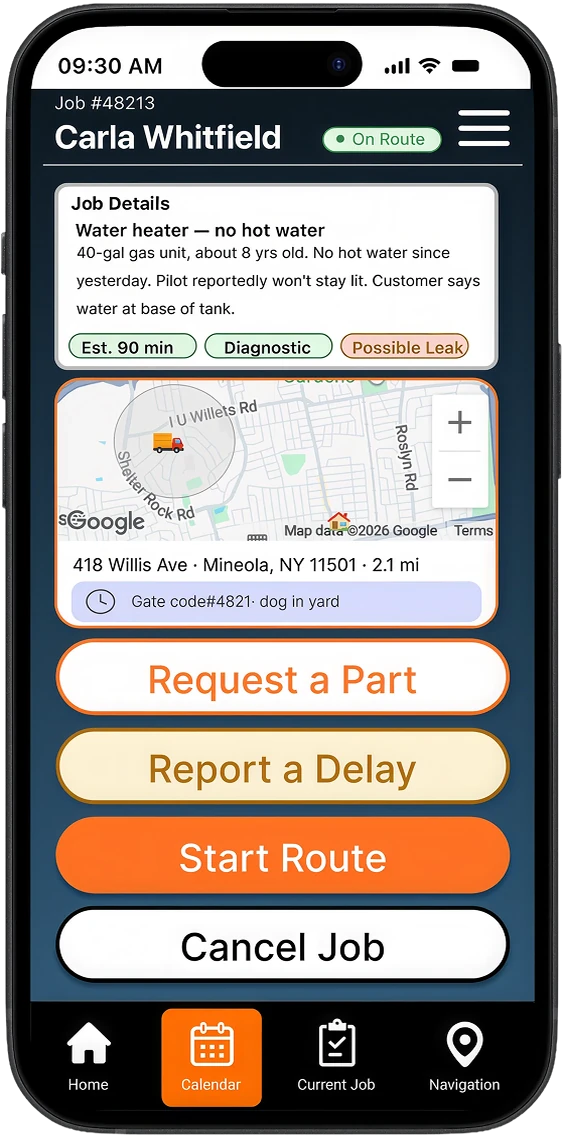
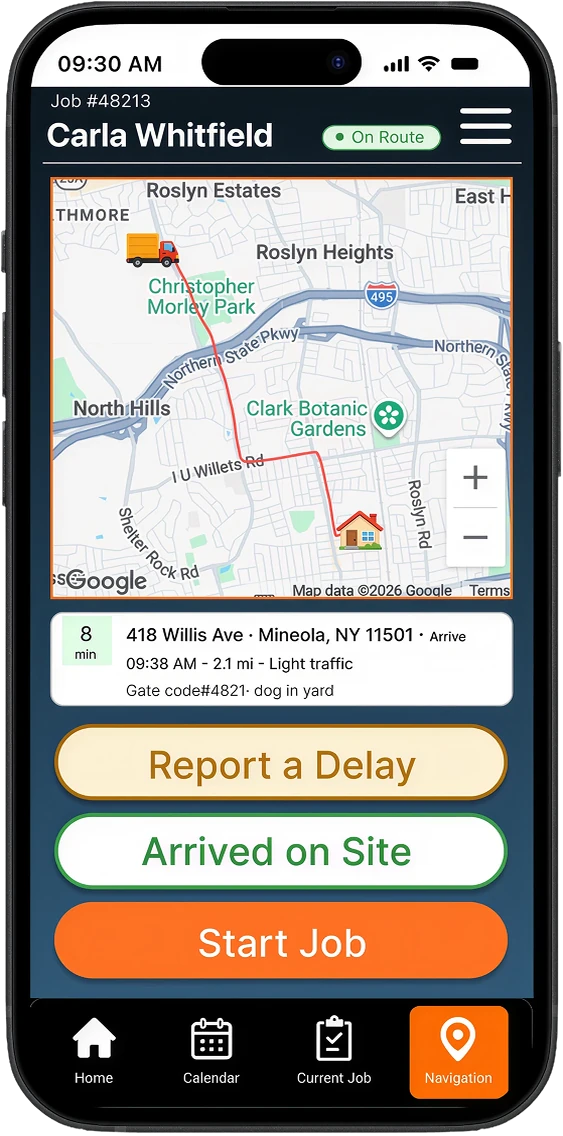
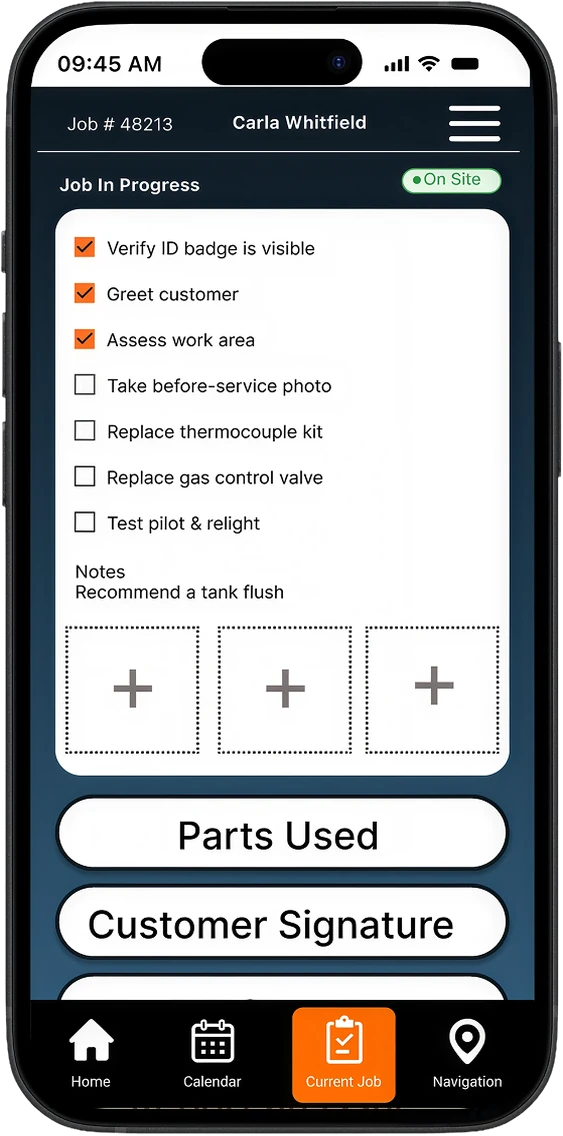
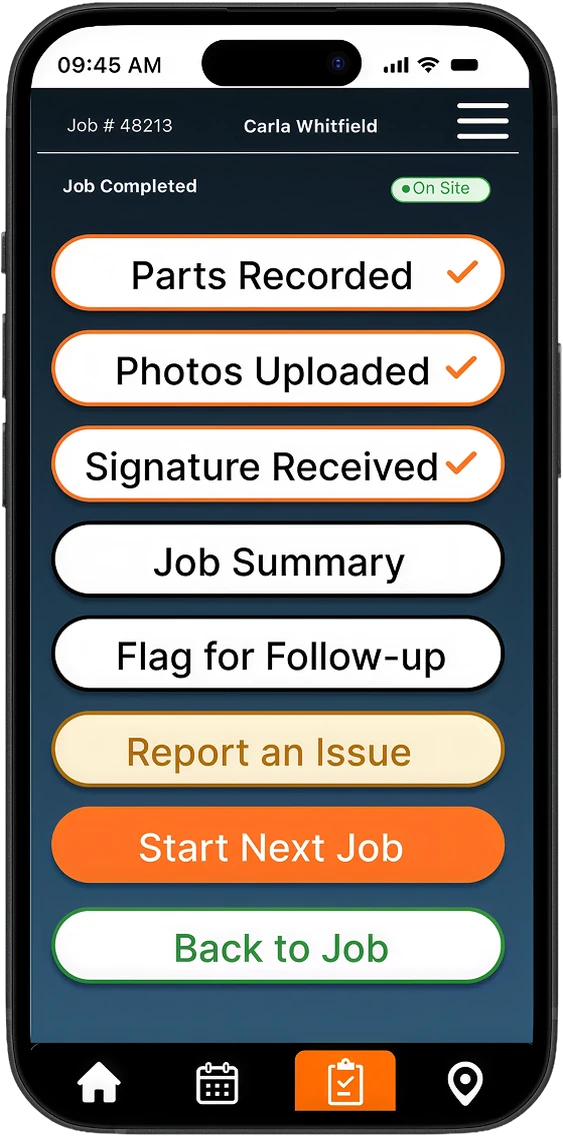
The Technician

Real-time job information, inventory visibility, and in-truck reporting reduced manual work and improved efficiency.

Operations & Dispatch

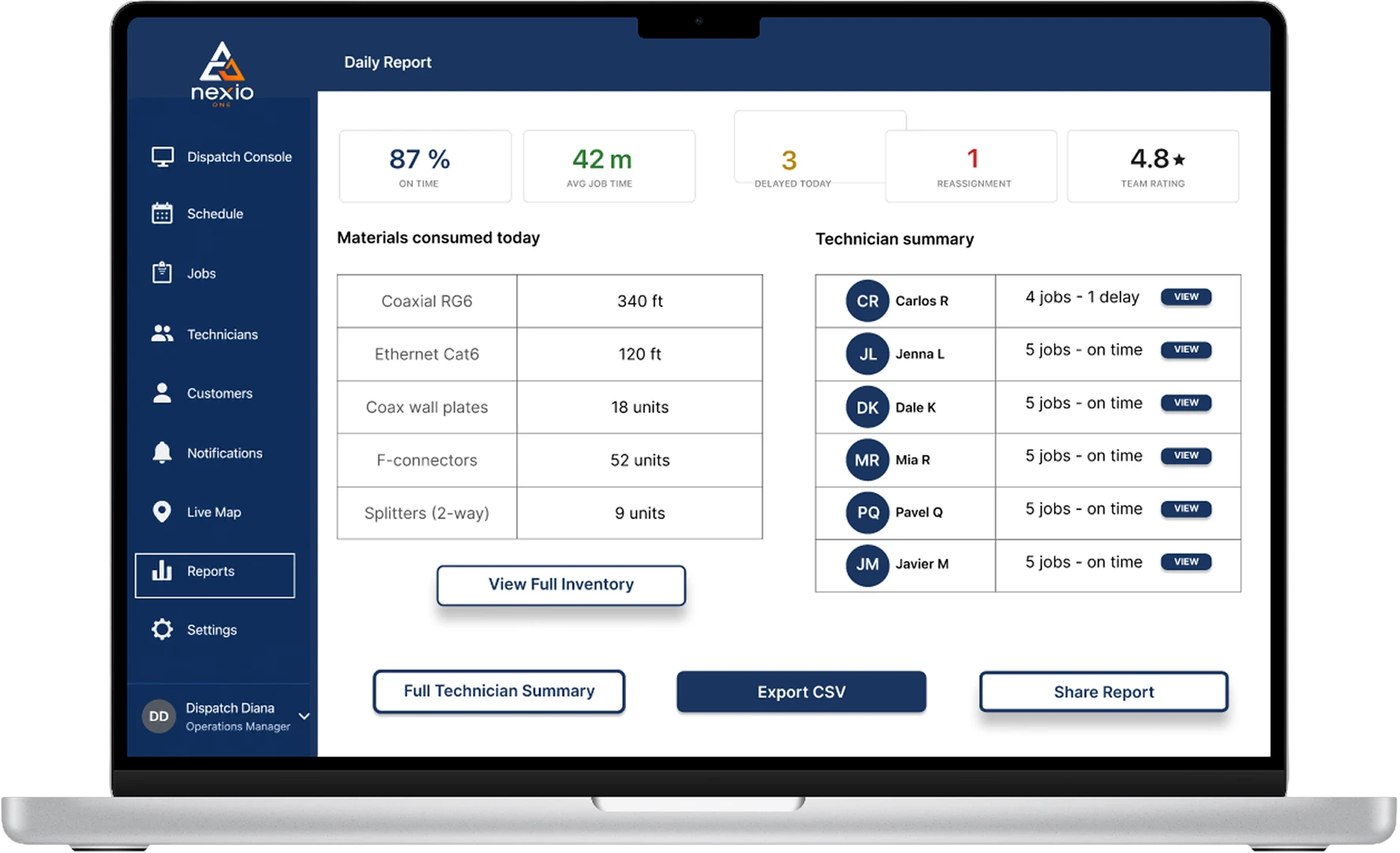
A live operations dashboard, automated notifications, and shared visibility improved coordination across the entire service ecosystem.

Conclusion

An antique pocket watch. Its engraved cover opens, then the clock face beneath it opens, revealing the movement inside.

I started this project trying to improve the appointment experience. Instead, I discovered that waiting was only the visible symptom of a much larger problem.

The real issue wasn't scheduling, it was fragmented information. Customers, technicians, and Operations & Dispatch were all making decisions with different pieces of the same story.

Research also uncovered another opportunity: small and medium-sized service businesses remain underserved by existing solutions, many of which are designed for larger organizations or come with costs and complexity that smaller teams struggle to justify.

By the end of the project, I wasn't designing a tracking feature anymore.
I had designed a connected service ecosystem that improved visibility, communication, and coordination for customers, technicians, and Operations.

This project has changed how I think about design. Sometimes the most valuable solution isn't a new feature. It's making the right information available to the right people, at the right time.

In the end, the answer to my original
question wasn't a feature.
It was a System.

The Aftermath

Designing and prototyping the solution answered many of the questions uncovered during the research, but it also revealed new ones.
A production-ready product would need to support the realities of service operations, including delays, inventory shortages, customer no-shows, offline connectivity, onboarding, privacy, and system integrations.
Addressing those challenges would be the next stage of the project, transforming a validated concept into a production-ready platform.

A tall, uneven stack of blank paper documents, still growing.

Do you want to see the full research?