Local Harvest Collective · Case Study
Concept ExplorationWhy is it so hard to find local eggs and honey?


This page shows how I explore a problem before conducting surveys or competitive research. I start by breaking the problem apart by asking questions, challenging assumptions, following each “what if?”, and seeing where the pieces lead.
The thinking, in order↓
01
Before I Researched, I Questioned the Problem
Doubting the first answer
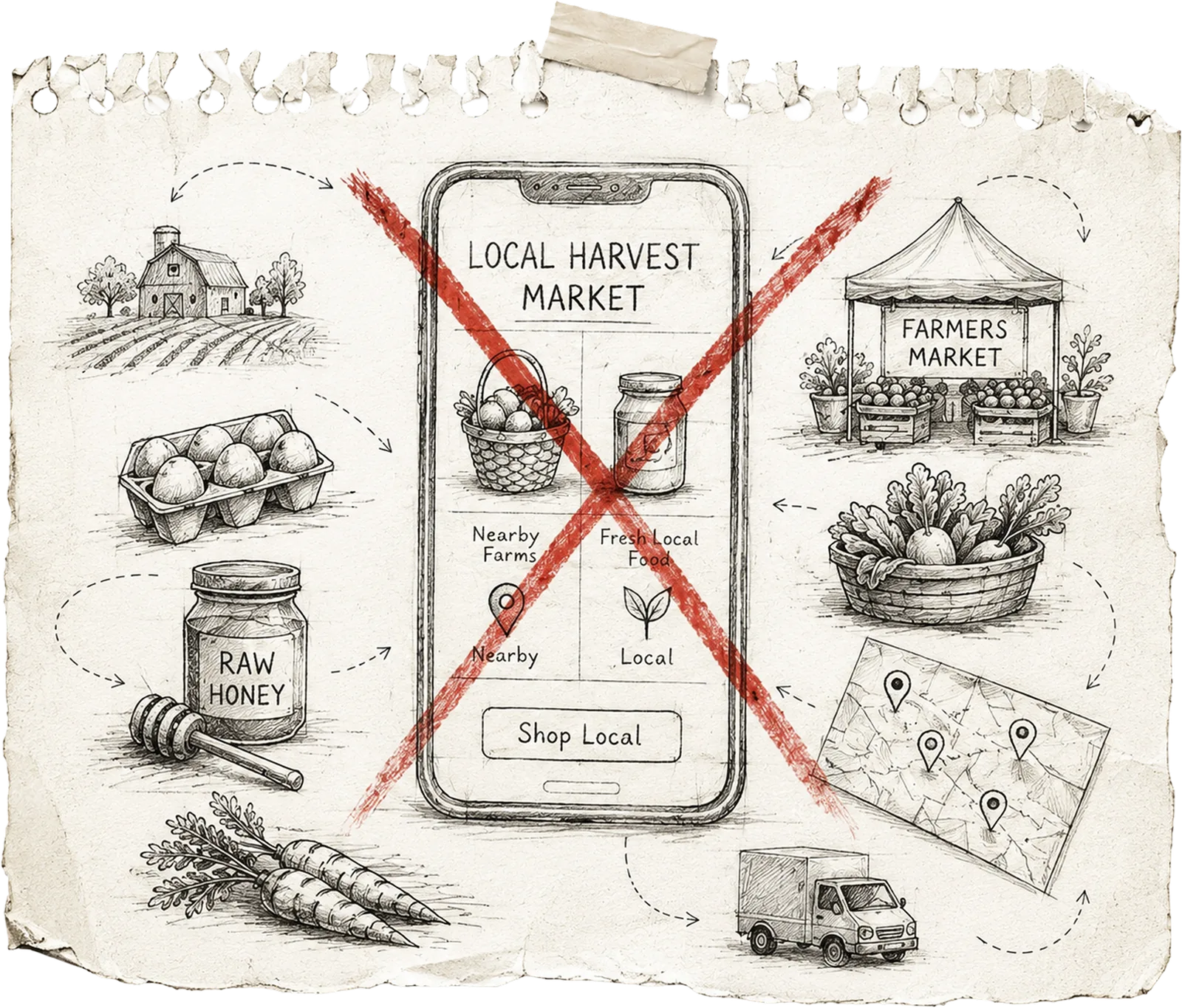
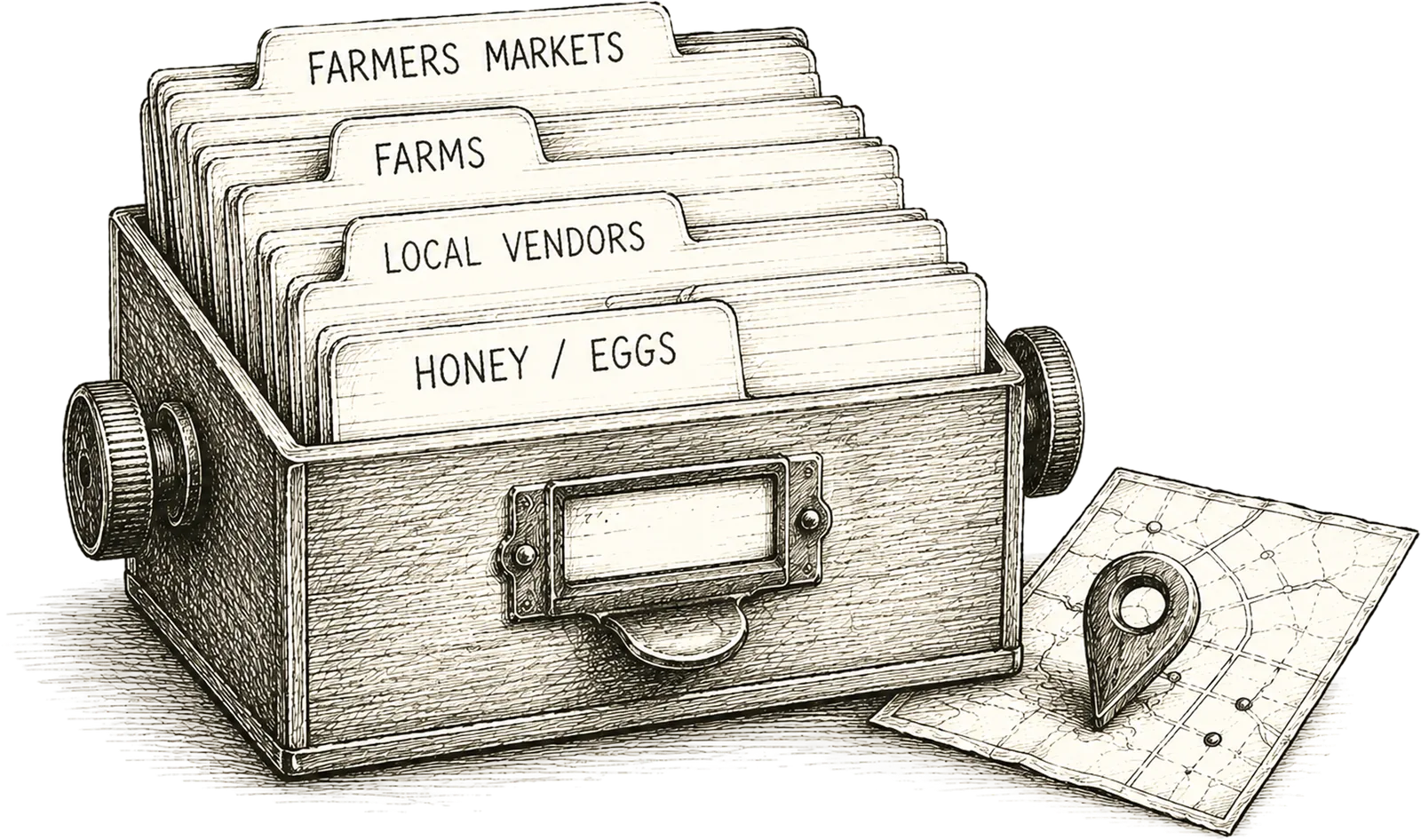
My first thought was straightforward: people need a better way to find farmers markets and local vendors. A directory. But the more I thought about it, the less convinced I was that finding the market was actually the problem.
Most people already know farmers markets exist. So maybe the problem was never Finding Them.
02
Then Came the What Ifs
Following one question into the next.
What if
What that would mean
What if the market doesn’t fit into people’s lives?
Convenience
Maybe the problem isn’t interest. Maybe it’s convenience.
What if I knew what was available before going?
Visibility
I could plan the market around my life.
What if I could reserve it before it sells out?
Reservation
The farmer would know how much demand exists before market day.
What if local makers were part of this too?
Discovery
One place could make more local products visible.
Even if I solved discovery, availability, and reservations, people still had to go to the market and get it.
And then came the question that changed the idea
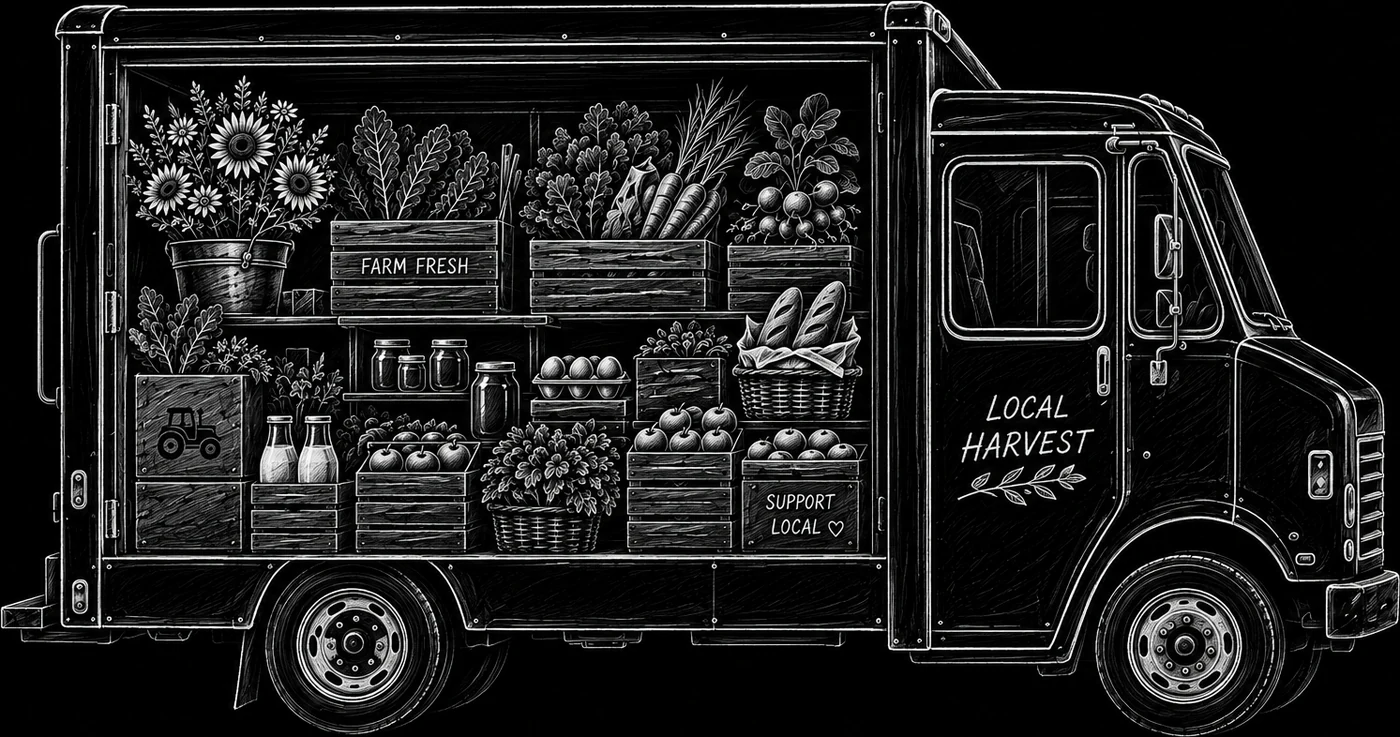
What if the market came to the people?
One coordinated community delivery.
Local producers could share the delivery structure while customers receive everything together. No weekly subscription. No individual farmers making deliveries all week.
03
Who Would This Actually Help?
Naming both sides
By this point, I wasn’t thinking only about someone looking for eggs anymore.
The problem wasn’t on either side. It was what wasn’t happening between them.
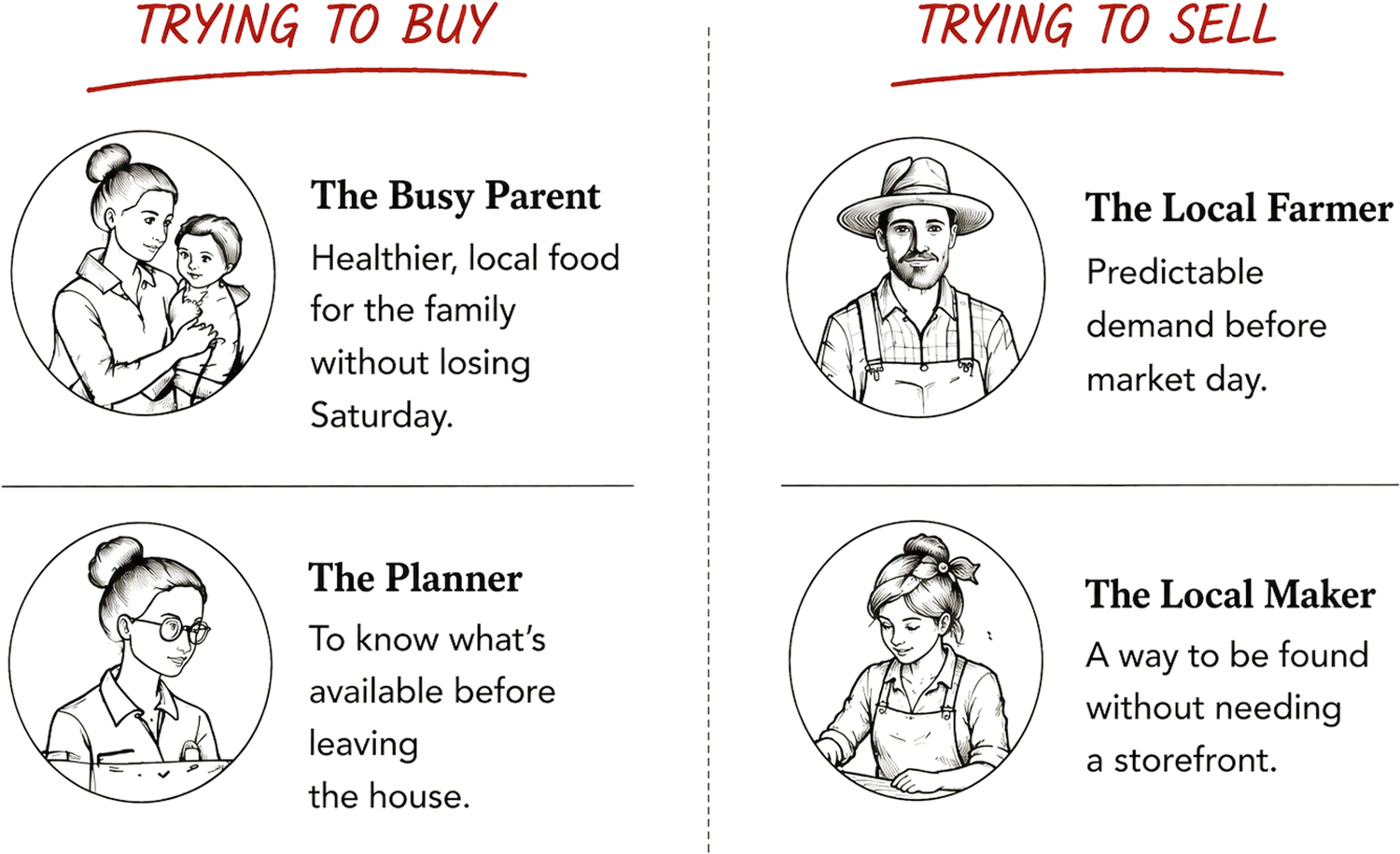
Trying to buy
The Busy Parent
Healthier, local food for the family without losing Saturday.
The Planner
To know what’s available before leaving the house.
Trying to sell
The Local Farmer
Predictable demand before market day.
The Local Maker
A way to be found without needing a storefront.
the same missing connection
04
A Different System Started to Form
Connecting both sides
What began as where can I find local eggs? was turning into something much bigger.
The customer gets convenience. The producer gets visibility and predictability. And the community keeps more commerce Local.
What would connect both sides?
- Discover local producers
- See what’s available this week
- See what’s coming next week
- Reserve products before they sell out
- Order from multiple local businesses at once
- Receive everything through coordinated community delivery
05
But These Were Still Assumptions
Marking what I hadn’t proven
At this point, I had moved far beyond my original idea of a farmers market directory. But I hadn’t proven anything.
I still needed to know
- Do people actually have trouble finding local products, or is convenience the bigger barrier?
- Would customers want weekly availability notifications?
- Would they reserve produce before it was harvested?
- How far ahead do people want to see seasonal availability?
- Would Friday delivery actually make local shopping easier?
- Would customers buy from several local producers in one order?
- Would farmers and makers see value in knowing demand ahead of time?
- Could reservations really help reduce unsold inventory and waste?
And most importantly
Was I solving a discovery problem, or a participation problem?
That was what I needed to find out next.
Time to Research.