OneCare at Home · Case Study
Concept ExplorationSame as Your Doctor’s Office. But at Home.


Why do I have to drive to a doctor’s office
when I can barely get out of bed?
If getting to care is part of the problem, what would happen if care came to the patient instead? From there, I started following the people, the questions, and everything that would have to happen around the visit to see where the pieces lead.
Scroll to explore
01
Before I Researched, I Mapped the Problem
Breaking it apart
Some patients struggle to physically reach care. Families and caregivers are left coordinating appointments, transportation, insurance, prescriptions, and providers. Telehealth removes the travel, but it also removes something important: the ability to physically examine the patient.
That made me wonder if the problem wasn’t just where healthcare happens, but How it happens.
02
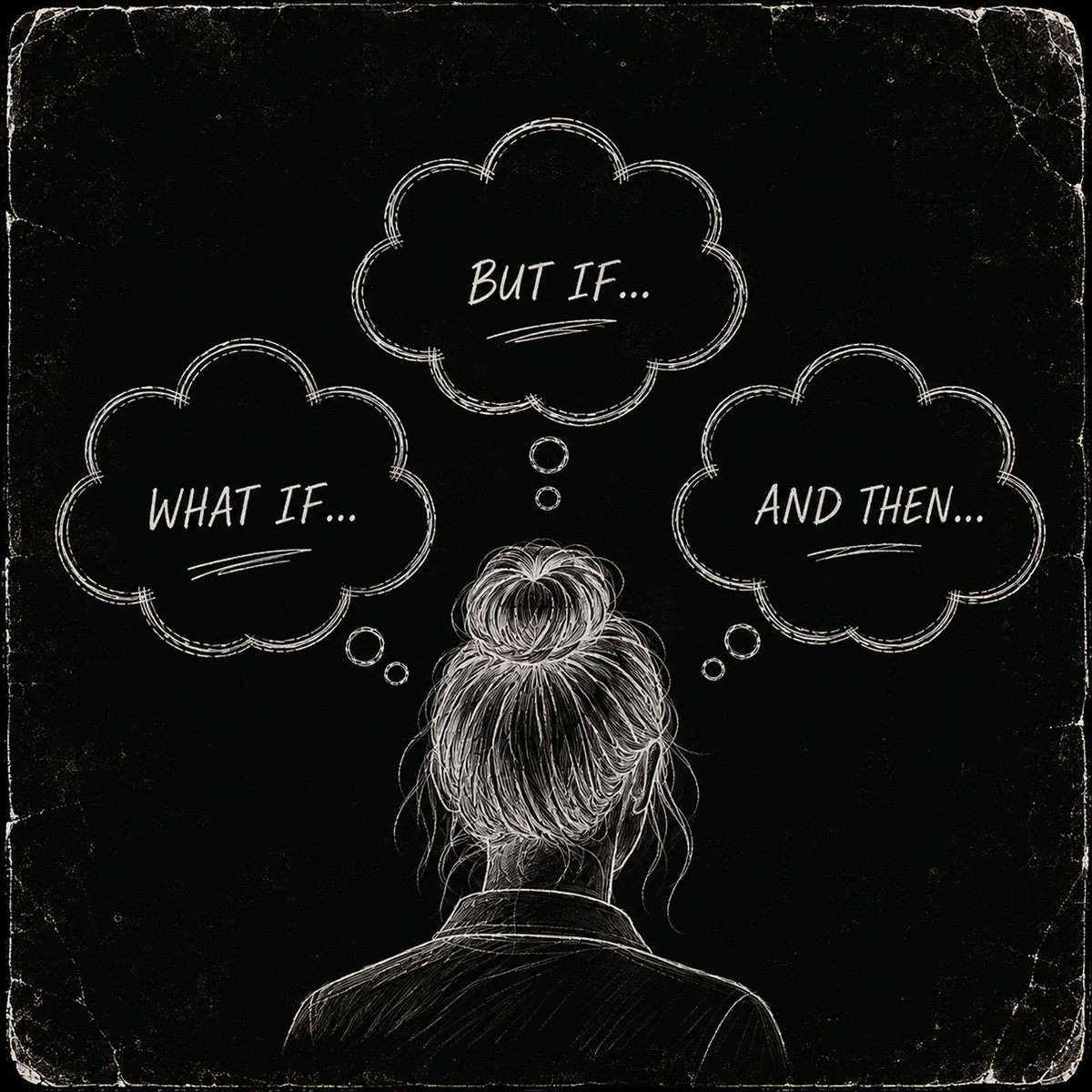
Then Came the What Ifs
Asking what if
What if
What that would mean
What if basic medical care could come to the patient?
Access
Care could happen at home.
What if every visit didn’t require a doctor?
Matching
Send the right professional for the need.
What if telehealth had a physical presence?
Presence
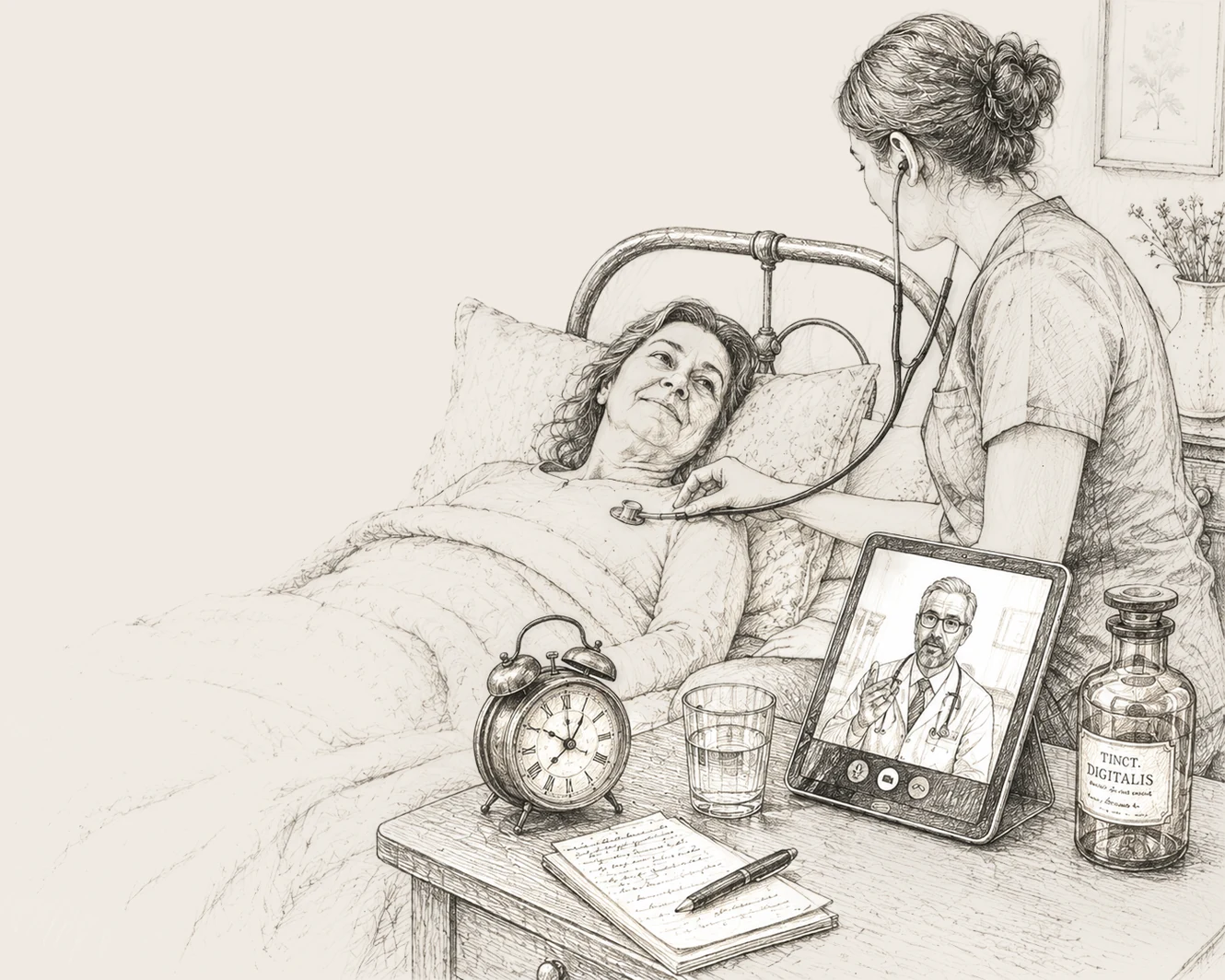
A nurse could become the doctor’s eyes, ears, and hands.
What if the visit wasn’t the end of the experience?
Continuity
Labs, results, prescriptions, and follow-up could stay connected.
Once I stopped assuming the doctor had to be in the room, the idea started to open up. If different parts of care could happen in different ways, what actually needed to be there, and what could be connected from somewhere else?
If healthcare itself is not the problem, what if I design the experience around the person instead?

03
Who Would This Actually Help?
Counting who it touches
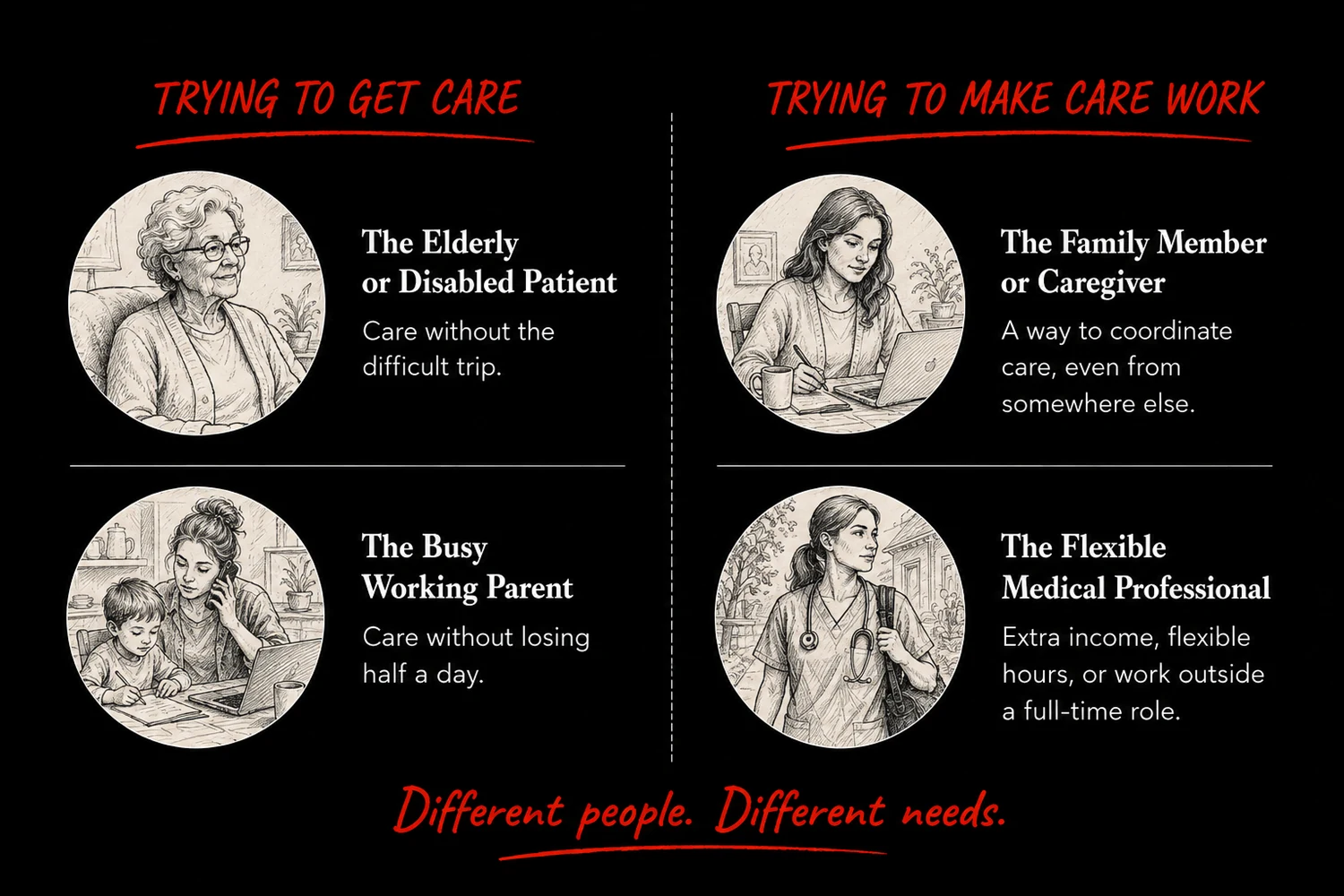
As the questions grew, so did the number of people I could see using it.
The problem wasn’t limited to one user. There were needs on Both Sides of the Service.
04
A Possible System Started to Form
Sketching the service
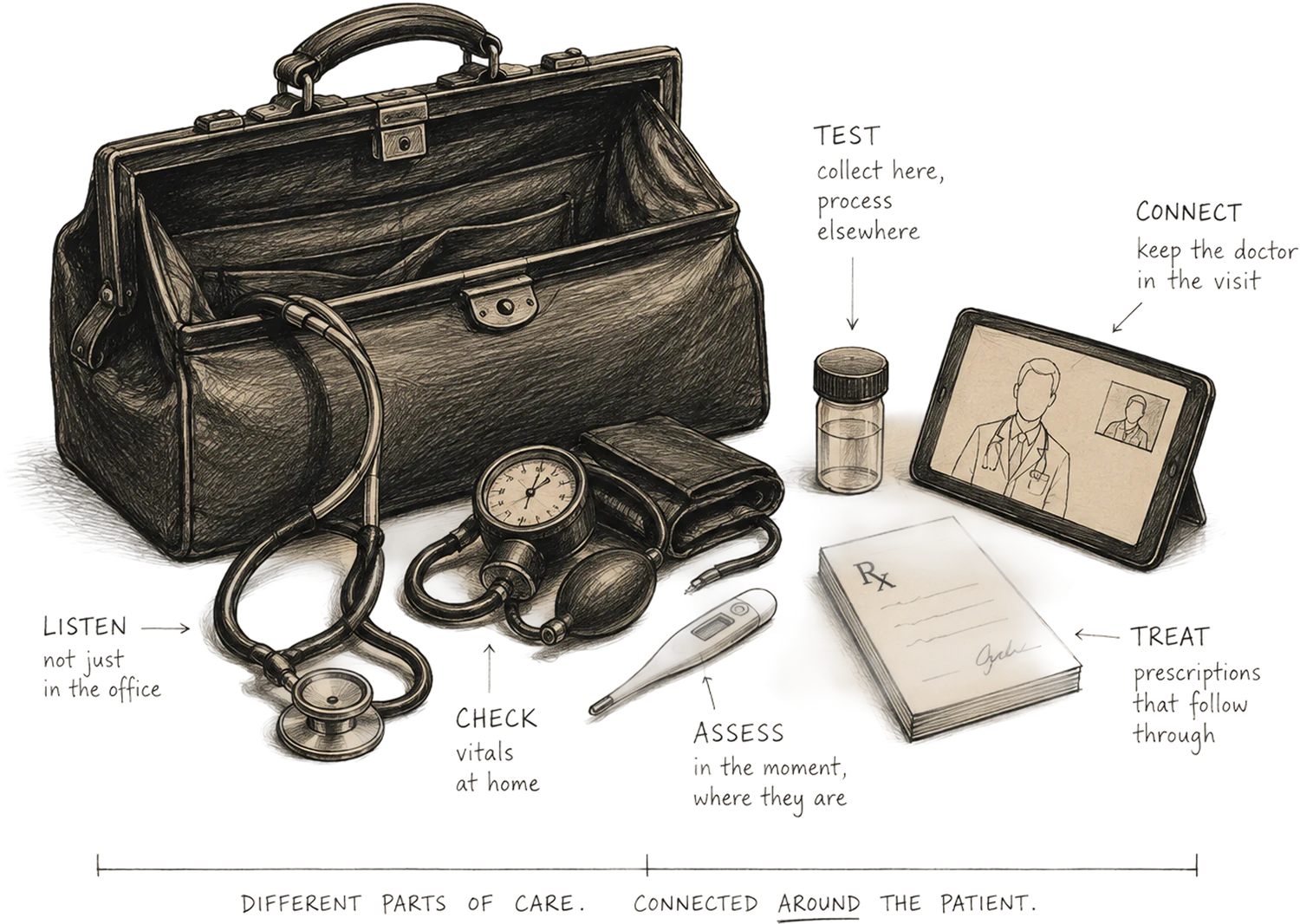
Bringing care home raised another problem: not every need requires the same professional. A blood draw, an ultrasound, and a diagnosis require different skills, so sending a doctor to every visit wouldn’t make sense.
Telehealth has the doctor, but no hands. A nurse has the hands, but not always the authority to diagnose. Put Them Together.
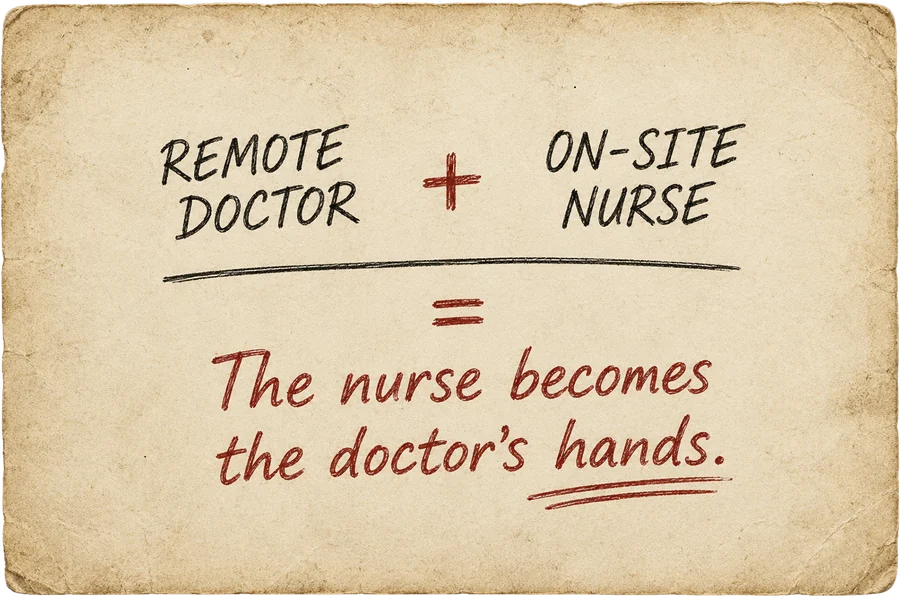
Match the need to the professional.
- Simple testMedical technician or phlebotomist
- Clinical careRegistered nurse
- ImagingSonographer
- DiagnosisNurse practitioner or physician
05
Then I Started Thinking Beyond the Visit
Following the experience
Once I looked at the service from each person’s point of view, the visit itself was only part of what they needed. Each person had a different question the experience would have to answer.
The visit could solve the medical need. But the experience had to solve everything else.
User
Their question
What they need
Patient
How much is this going to cost?
Clear pricing before booking.
Family / Caregiver
Can I arrange care for my mom from another state?
Stay involved from far away.
Busy Working Parent
Can a nurse come between my meetings?
Care without losing half the workday.
Medical Professional
Can I make extra money without taking another full-time job?
Flexible work on their schedule.
06
But These Were Still Assumptions
Naming what I don’t know
By this point, I had identified the problem, the people it could affect, and a possible way the service could work. But none of that meant people actually wanted it. I had followed the logic as far as I could. Now I needed evidence.
Time to Research.
I still didn’t know
- Would patients actually want medical professionals coming into their homes?
- Would families trust someone they booked through a platform?
- Which services would people actually use at home?
- Would transparent pricing and insurance information affect their decision to book?
- Would people see value in a nurse + video doctor visit?
- Would medical professionals want to work this way?
- And was I solving the right problem in the first place?